




A beautiful home should do more than look attractive. It should support your daily routine, reflect your personality, and make every room comfortable to use. DesignMode24 Interior Design offers a useful way to think about these goals by bringing together appearance, practicality, and thoughtful planning.
Whether you are updating one room or redesigning your entire house, the best results begin with understanding your needs. You do not always need expensive furniture or major renovations. Careful space planning, suitable materials, balanced lighting, and smart storage can make a noticeable difference. This guide explains how to create practical home interiors without sacrificing style.
What Is DesignMode24 Interior Design?
DesignMode24 Interior Design can be understood as an approach to creating homes that balance function with visual appeal. Rather than treating decoration as a collection of attractive objects, it considers how people move through rooms, use furniture, store belongings, and experience their surroundings. The aim is to develop functional living spaces that feel coordinated without becoming impractical.
It is best viewed as a flexible design approach rather than a formally established interior design movement. Homeowners can adapt its ideas to different budgets, property sizes, and personal tastes. A small apartment might benefit from multifunctional furniture, while a larger home may need better zoning and more consistent materials. In both cases, successful design starts with real needs rather than temporary trends.
Core Principles of DesignMode24 Interior Design
Functionality Comes Before Decoration
A room should work well before additional decorations are introduced. Consider how you use each space, where you need storage, and how much room people require to move comfortably. Good ergonomics, sensible furniture placement, and clear traffic flow help prevent a room from feeling crowded. These practical decisions also make everyday tasks easier.
Aesthetics and Visual Harmony
A coordinated interior connects colors, furniture, textures, and finishes into a consistent whole. This does not mean every item must match. Instead, visual harmony, suitable proportion, and thoughtful contrast help different elements work together. Repeating a material or color in several places can create design cohesion, while carefully chosen focal points keep the room interesting.
Personalization and Adaptability
A home should reflect the people who live in it. Family routines, hobbies, work requirements, and future plans all influence the right design choices. Personalized home interiors may include a reading corner, a practical home office, or display space for meaningful objects. Flexible furniture and adaptable layouts also allow rooms to change as household needs evolve.
How to Plan a DesignMode24 Interior Design Project

Identify Your Needs and Set Priorities
Start by identifying what currently works and what needs improvement. A dark living room may need better lighting, while an overcrowded bedroom might need storage rather than new decorations. Write down the main problems and decide which changes matter most. This simple home renovation planning process prevents unnecessary purchases and gives the project a clear direction.
Measure the Space Before Buying Furniture
Accurate measurements help you choose furniture that fits both physically and visually. Record room dimensions, door openings, window placement, and ceiling height. Then create a basic floor plan showing the main furniture pieces and walking routes. Proper room layout planning protects circulation space and reduces the risk of buying items that make a room difficult to use. Celeb Goes
Establish a Realistic Budget
A clear interior design budget helps you divide spending between essential improvements and optional upgrades. Consider the cost of furniture, paint, lighting, labor, delivery, and unexpected repairs. If funds are limited, prioritize items that affect comfort or safety. You can introduce decorative accessories gradually instead of purchasing everything at once.
Popular Design Styles for Modern Homes
Modern and Minimalist Interiors
Modern home design often emphasizes clean lines, simple forms, and a deliberate choice of materials. Minimalist rooms take this idea further by reducing unnecessary objects and giving important features more space. Neutral colors, uncluttered surfaces, and useful storage can make a home feel calmer. However, minimalism should not remove everything that gives a room warmth or personality.
Scandinavian and Natural Design
Scandinavian-inspired interiors commonly combine light colors, practical furniture, natural textures, and an emphasis on comfort. Hardwood, linen, wool, cotton, and pale finishes can create a relaxed atmosphere. Natural light is especially valuable in these spaces. A few warm accents, soft textiles, and useful furnishings prevent the design from feeling empty or overly plain.
Industrial and Contemporary Styles
Industrial interiors may feature metal finishes, exposed structural details, darker shades, and textured surfaces. Contemporary interiors are more flexible and can combine current furniture shapes with different materials and colors. Both styles benefit from restraint. Choose a few strong features, then balance them with comfortable seating, appropriate lighting, and finishes that suit the building.
Space Planning and Furniture Selection

The way furniture is arranged can affect a room more than the number of objects it contains. In a living room, a sofa or sectional sofa should allow people to converse without blocking doorways. A coffee table needs enough surrounding space for comfortable movement. In a bedroom, a bedside table should be accessible without restricting the route around the bed.
Furniture scale matters just as much as style. Oversized pieces can overwhelm a compact room, while very small furniture may look lost in a large one. Consider furniture scale and proportion, room dimensions, and the purpose of each item before buying. In smaller homes, a storage ottoman, sofa bed, or storage bed can provide extra function without requiring more floor space.
Choosing Interior Color Schemes
Color influences the atmosphere of a room and the way its features appear. A considered interior color scheme may combine neutral colors with one or two accent shades. Warm tones such as soft beige and terracotta can feel welcoming, while cool tones such as blue and green often create a calmer impression. The final effect depends on the shade, surrounding materials, and available light.
Before painting an entire room, test several paint samples on the wall and observe them at different times of day. Daylight can make colors appear different from artificial light, especially in rooms with limited windows. Use cushions, artwork, rugs, or curtains to introduce stronger colors without committing to permanent changes. This approach makes future updates easier and less expensive.
Lighting Design for Comfortable Interiors
Lighting should support the activities that take place in each room. Ambient lighting provides general illumination, while task lighting helps with specific activities such as cooking, reading, or working. Accent lighting draws attention to artwork, shelving, or architectural details. Combining these layers creates more flexibility than relying on a single ceiling fixture.
Natural light also deserves attention. Keep windows as clear as practical, choose suitable window treatments, and position work areas where daylight is useful. In darker rooms, LED lighting can offer an energy-efficient option when the brightness and color temperature suit the task. Floor lamps, pendant lights, desk lamps, and wall lights can add focused illumination without requiring a complete electrical redesign.
Materials, Textures, and Finishes
Materials affect a room’s appearance, comfort, maintenance needs, and long-term cost. Hardwood may add warmth to living areas, while ceramic tile can suit surfaces exposed to moisture. Natural stone, glass, and metal finishes offer different visual qualities, but each material has specific cleaning and care requirements. Choose finishes according to how the space will actually be used.
Texture adds depth without requiring many colors. Linen, cotton, wool, velvet, wood grain, and wall panels can create contrast through their surfaces. In bathrooms and kitchens, prioritize appropriate moisture-resistant materials and durable surfaces. Before purchasing, check product instructions, maintenance requirements, and suitability for the intended location. Attractive materials are most useful when they can withstand everyday life.
Room-by-Room Interior Design Ideas
Living Room
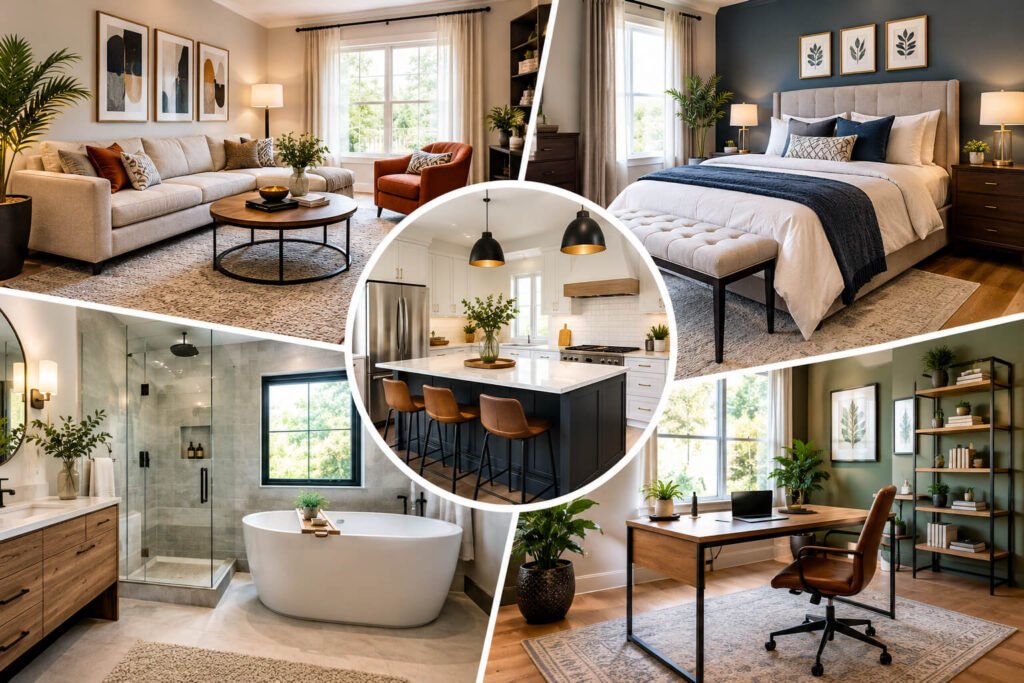
A successful living room supports conversation, relaxation, and entertainment. Arrange seating around a clear focal point, such as a window, fireplace, or media unit. Keep pathways open and use rugs to define the seating area where appropriate. Shelving and closed cabinets can organize books, electronics, and accessories without making the room feel crowded.
Bedroom
A bedroom should encourage rest while providing convenient storage. Position the bed where movement around it remains comfortable, and select bedding that works with the room’s color palette. A built-in wardrobe can save space when planned well, while a storage bed may help in smaller homes. Keep lighting practical, with softer illumination for relaxing and focused light for reading.
Kitchen and Dining Area
The kitchen needs a layout that supports food preparation, cleaning, and storage. Keep frequently used items accessible and avoid placing furniture where it interferes with cabinet doors or appliance access. In the dining area, choose a table that suits the household and leaves enough space for chairs. Pendant lights can help define the dining zone in an open-plan room.
Bathroom and Home Office
Bathrooms benefit from durable finishes, useful storage, and lighting that supports grooming. A well-sized bathroom vanity can organize daily essentials, while suitable ventilation helps manage moisture. A home office needs a comfortable chair, a desk that fits the available space, and task lighting. Keep cables and supplies organized so the workspace remains practical throughout the day.
Small-Space Interior Design
Small homes require careful choices because every item competes for limited floor area. Use furniture that fits the room rather than selecting pieces based only on appearance. Wall-mounted shelving can provide storage without occupying the floor, and a foldable dining table may help a compact kitchen adapt to different needs. Mirrors and reflective surfaces can also make a room feel more open, depending on their placement.
A small space does not need to feel bare. The key is to limit unnecessary furniture and give each area a clear purpose. Multifunctional furniture can combine seating, sleeping, and storage in one piece. Light colors may help a room feel brighter, but contrast and texture can still add character. Good planning creates comfort without making every design choice look the same.
Smart Storage and Home Organization
Storage works best when it reflects the way people use their belongings. Frequently used items should be easy to reach, while seasonal objects can be placed in less accessible areas. Built-in wardrobes, kitchen cabinets, drawer organizers, and wall-mounted shelving can reduce clutter when their size and location suit the room. Avoid adding storage units that block movement or make the space feel heavy.
A clutter-free home does not require owning very few things. It requires giving possessions suitable places and regularly reviewing what remains useful. Use baskets or closed cabinets for small items that otherwise spread across surfaces. In shared spaces, simple organization habits can be more effective than buying additional containers. Good storage supports daily routines instead of becoming another task to manage.
Walls, Flooring, and Architectural Details
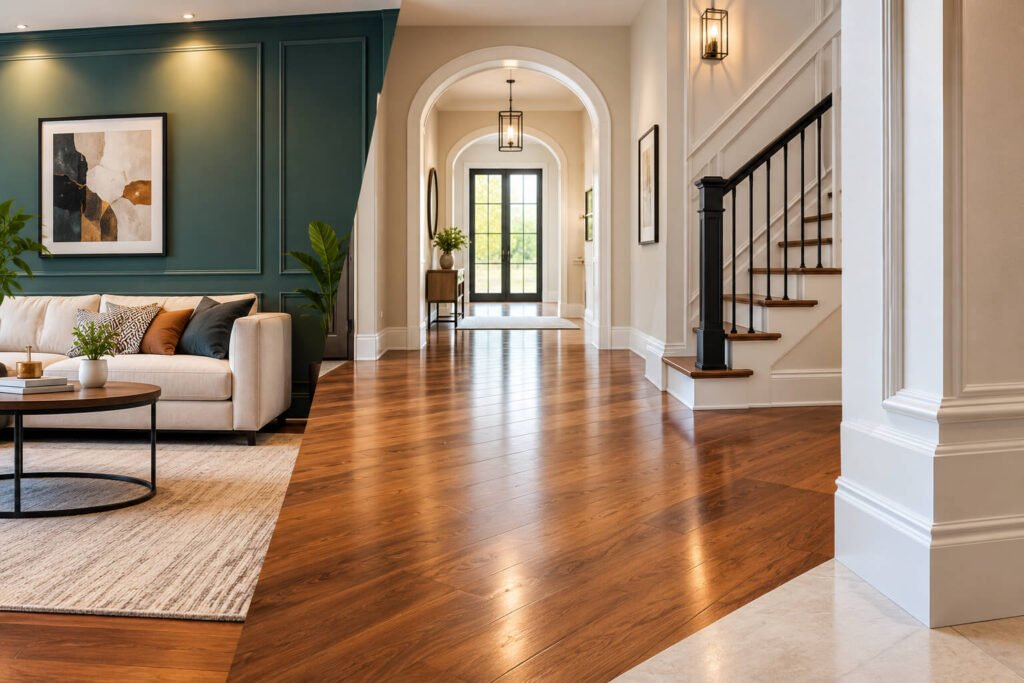
Walls and floors create the visual foundation for a room. Paint offers a relatively simple way to change the atmosphere, while wallpaper and wall panels can introduce pattern or texture. Flooring should match the room’s activity level, cleaning requirements, and exposure to moisture. Durable surfaces are particularly important in entrances, kitchens, and other high-use areas.
Architectural details can also influence the design. Window placement affects daylight, while ceiling height changes how furniture and lighting feel in the space. Rather than hiding every original feature, consider whether trim, exposed beams, or built-in storage can become part of the overall design. Consistency across nearby rooms helps the home feel connected without making every space identical.
Accessories and Decorative Details
Accessories add personality after the essential layout and lighting decisions are complete. Artwork, plants, cushions, rugs, and carefully selected objects can connect colors or introduce contrast. Instead of filling every empty surface, choose items that contribute meaning, function, or visual interest. Leaving some negative space allows important pieces to stand out and keeps the room from feeling overloaded.
Repeat a small number of colors or materials to create continuity. For example, a wood finish used in a table might appear again in a picture frame or shelf. This kind of repetition supports visual balance without requiring matching furniture sets. The best decorating choices feel connected to the people who live in the home rather than copied directly from a showroom.
Creating Balance and Harmony
Balance does not always mean placing identical objects on both sides of a room. Symmetry can create a formal, orderly feeling, while asymmetrical balance uses different objects with similar visual weight. Contrast helps important features stand out, and repetition creates a sense of connection. These interior design principles make it easier to understand why some rooms feel coordinated and others seem disjointed.
Scale, proportion, and spacing also affect how a room is experienced. A large artwork may suit a wide wall, while several smaller pieces can work better in a narrow area. Furniture should relate to the room’s dimensions and to the other objects around it. When the major elements feel balanced, decoration becomes easier because the space already has a clear visual structure.
Sustainable Interior Design Choices
Sustainable design considers the resources used to make products, how long they last, and what happens when they are no longer needed. Reusing existing furniture, restoring wooden pieces, and choosing reclaimed materials can reduce waste. Before replacing an item, consider whether repair, refinishing, or a different arrangement could solve the problem. These choices can also help control the overall project cost.
Look for durable products with clear maintenance guidance and suitable materials for their intended use. Responsible sourcing and repairability may be more valuable over time than a low purchase price alone. Energy-efficient lighting and low-emission finishes can also be worth considering during a renovation. For remodeling projects, consult reliable guidance on indoor air quality from the U.S. Environmental Protection Agency and residential lighting from the U.S. Department of Energy.
Interior Design Trends Versus Timeless Choices
Trends can introduce fresh ideas, but they do not always suit every home or lifestyle. A popular color or furniture shape may lose appeal, while replacing major items can be expensive. A more reliable approach is to use current trends in changeable details, such as cushions, artwork, small lamps, and accessories. Keep expensive or difficult-to-replace elements more closely connected to your long-term needs.
Timeless interior design does not mean avoiding modern ideas. It means choosing pieces that remain useful and attractive beyond a single season. Comfortable furniture, practical layouts, well-maintained materials, and colors you enjoy can provide a lasting foundation. Personal preferences should guide the final decision because a home needs to serve its occupants, not follow every change in design fashion.
Managing Costs During a Home Makeover

A room makeover can range from a few simple updates to a major renovation. Decide which changes will have the greatest effect before spending money. Rearranging furniture, improving lighting, painting walls, or repairing existing pieces may solve common problems without requiring a complete redesign. When comparing prices, consider quality, delivery, installation, and expected maintenance rather than focusing only on the initial cost.
For larger projects, request written estimates and leave room in the budget for unexpected work. Changes involving electrical systems, plumbing, structural elements, or moisture problems may require qualified professionals. Avoid spending the entire budget on decorative finishes before addressing practical issues. A sensible sequence helps prevent rework and keeps the project focused on improvements that matter most.
Common Interior Design Mistakes to Avoid
One common mistake is buying furniture before measuring the room. Another is choosing colors or finishes without considering how they look under the available light. Too many decorative objects can make a space feel busy, while insufficient lighting can leave even an attractive room uncomfortable to use. These problems are easier to prevent during planning than to fix after everything has been purchased.
It is also worth avoiding designs that ignore daily habits. A beautiful desk will not help if there is no comfortable place for the chair, and open shelving may be inconvenient for someone who prefers hidden storage. Make decisions based on real routines, maintenance needs, and available space. The most successful interior is not necessarily the most expensive or fashionable; it is the one that works consistently.
DesignMode24 Interior Design Compared With Traditional Decorating
Traditional decorating often focuses on selecting colors, furniture, fabrics, and accessories to establish a particular look. A broader functional approach considers these elements alongside layout, circulation, lighting, storage, durability, and the needs of the people living there. The two approaches can work together. Decoration gives a room character, while practical planning helps ensure that the finished space remains comfortable.
For example, choosing a stylish dining table is only one part of designing a dining area. You must also consider chair clearance, walking routes, lighting, and how many people regularly use the table. Thinking about these factors early can prevent avoidable problems. The difference is not that decoration is unimportant, but that appearance should support the room’s purpose.
A Practical Interior Design Checklist
Before starting a project, review your priorities, measurements, lighting, storage, materials, and budget. Confirm that furniture fits the available space and that doors, drawers, and walkways remain accessible. Think about cleaning and maintenance before selecting finishes. This simple interior design checklist can help you make more consistent decisions without turning the process into a complicated set of rules.
Once the main requirements are clear, choose a color palette and identify the features that should attract attention. Compare new purchases with items you can reuse, and plan major renovation work before adding decorative details. Review the result after using the room for a while. Small adjustments to furniture placement, lighting, or storage may improve the space more than another shopping trip.
Frequently Asked Questions
What does DesignMode24 Interior Design mean?
DesignMode24 Interior Design can be used to describe a practical approach to creating attractive, organized, and comfortable interiors. The focus is on combining personal style with useful layouts, appropriate materials, lighting, and storage. It is not necessary to follow one fixed style to apply these ideas.
How can I improve my home without spending too much?
Start by identifying the room’s biggest problem. Rearranging furniture, removing unnecessary clutter, changing lamps, repainting a wall, or repairing existing items may create a visible improvement. Set a budget before purchasing new products and prioritize changes that improve comfort or everyday function.
Which colors work best in modern homes?
Neutral colors are a flexible starting point because they can work with many furniture styles and materials. However, the best palette depends on room size, natural light, personal preference, and the atmosphere you want to create. Test paint samples before making a final decision.
How can I make a small room feel larger?
Choose appropriately sized furniture, keep walking routes open, and use vertical storage where practical. Light colors and mirrors may help improve the sense of openness, but they are not substitutes for a workable layout. Reducing unnecessary items can also make a small room easier to use.
Is sustainable interior design expensive?
It does not have to be. Reusing furniture, repairing damaged items, buying durable products, and improving lighting efficiency can support more sustainable choices. Some responsibly sourced materials may cost more initially, so compare durability, maintenance, and expected lifespan before deciding.
Conclusion
A comfortable home comes from thoughtful decisions, not from copying a particular look. Start with how you use each room, then consider its layout, lighting, storage, materials, and color scheme. These choices create a strong foundation for decoration and help prevent unnecessary spending.
DesignMode24 Interior Design is most useful when treated as a flexible approach rather than a strict set of rules. Measure carefully, choose furniture for your needs, reuse what still works, and make improvements in a sensible order. With a clear plan, you can create a home that feels personal, looks inviting, and supports everyday life.
