



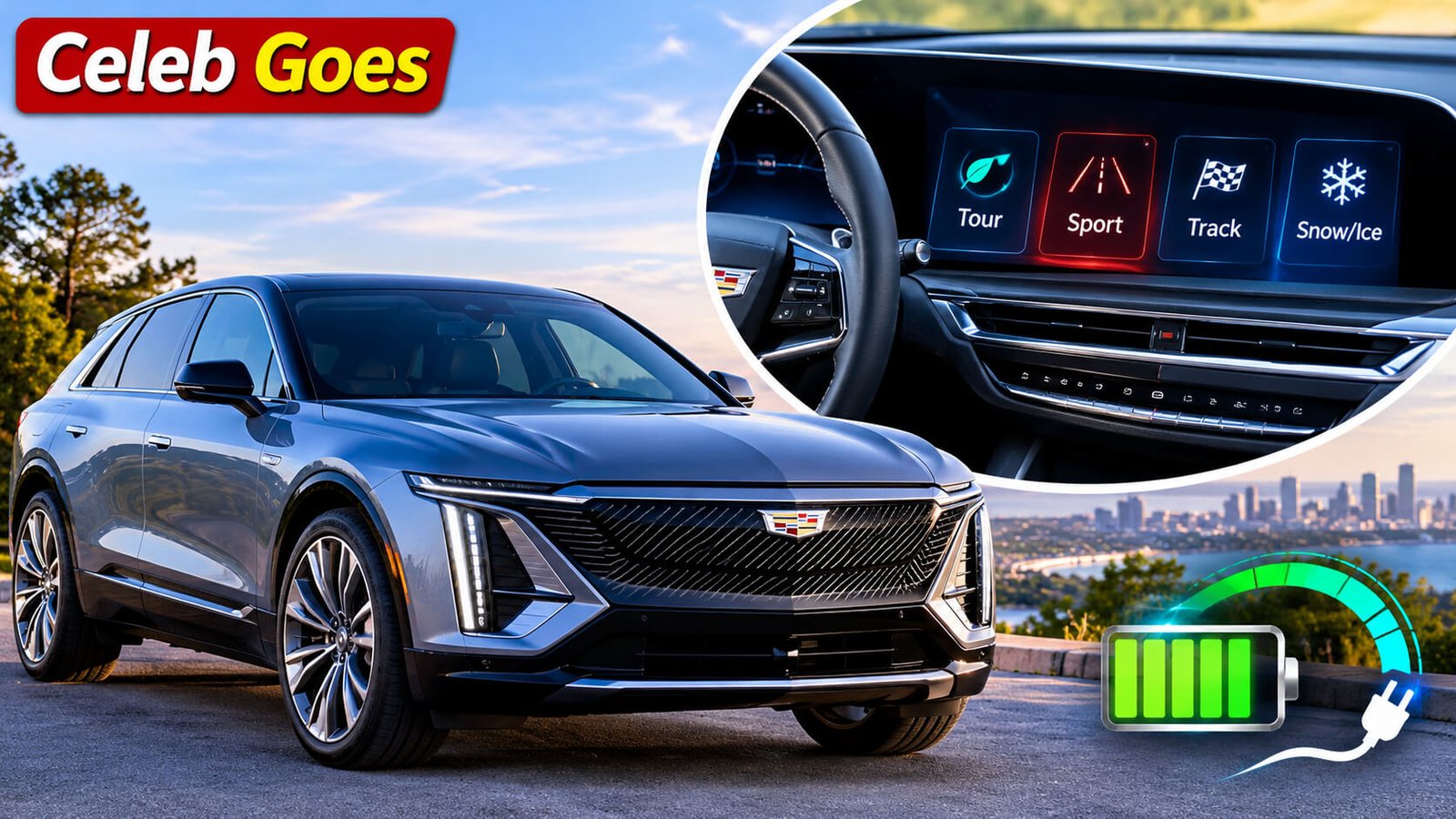
The Cadillac LYRIQ gives drivers several ways to tailor their electric driving experience. Tour, Sport, Snow/Ice, and My Mode each serve a different purpose. But do the driving modes in Cadillac LYRIQ offer different ranges or battery usages? They can influence real-world energy consumption, although they don’t change the battery’s physical capacity.
The difference comes from how each setting changes the vehicle’s response and how you drive. Acceleration, speed, weather, road conditions, and cabin temperature also affect efficiency. Understanding these factors helps you choose a suitable mode without expecting a setting to deliver extra miles automatically. Here’s what each mode does and how to make better use of your LYRIQ’s charge.
Understanding the Cadillac LYRIQ Driving Modes
The Cadillac LYRIQ is a battery-electric SUV that uses an electric motor and a rechargeable propulsion battery. Its available driving modes adjust selected vehicle characteristics to suit different situations. The 2025 model’s owner’s manual describes Tour, Sport, Snow/Ice, and My Mode. Equipment and available features can vary by model year and configuration.
These electric vehicle driving modes don’t increase battery capacity or create additional electricity. Instead, they influence the vehicle’s driving characteristics, such as accelerator response, steering feel, and other settings where equipped. Choosing the right mode can make driving more comfortable or controlled. Your driving habits ultimately determine much of the energy the vehicle consumes.
1. Tour Mode: Balanced Performance and Everyday Efficiency
Tour Mode is designed for ordinary city and highway driving. It provides a balanced combination of comfort and handling, making it a sensible everyday choice. Its predictable response can help you drive smoothly, but it doesn’t guarantee the highest possible range. Speed and acceleration still matter.
2. Sport Mode: Enhanced Performance and Power Delivery
Sport Mode gives the LYRIQ a more responsive driving character. Depending on equipment, it can adjust pedal tuning, steering effort, suspension, and other features. This sharper power delivery can make acceleration feel more immediate. However, frequent hard acceleration may increase electricity consumption.
3. Snow/Ice Mode: Better Traction on Slippery Roads
Snow/Ice Mode helps manage acceleration when roads have limited grip. It adjusts pedal tuning to support controlled movement on slippery surfaces. Certain vehicle systems may also respond differently depending on equipment. Its purpose is traction and control, not maximum range. Use it when road conditions call for it.
4. My Mode: Customizing Your Driving Experience
My Mode lets you personalize selected driving settings. Depending on the LYRIQ’s equipment, adjustments may include acceleration feel, steering, brake feel, suspension, and motor sound. A relaxed accelerator setting may encourage smoother inputs. However, customization doesn’t automatically improve EV battery efficiency.
Do Cadillac LYRIQ Driving Modes Affect Battery Usage and Range?
Driving modes can influence energy consumption because they change how the vehicle responds to driver inputs. For example, sharper accelerator tuning may encourage faster acceleration. The electric motor then draws power from the battery to meet that demand. The effect depends on how often and how strongly you accelerate.
However, the selected mode isn’t the only factor. A careful driver in Sport Mode may use less energy than an aggressive driver in Tour Mode. Speed, temperature, traffic, and climate settings can also change the result. That’s why there isn’t one fixed range difference that applies to every LYRIQ.
How Driving Modes Change Throttle Response and Power Delivery
The accelerator pedal tells the electric motor how much power to deliver. Different settings can change how quickly the vehicle responds to pedal movement. A sharper response may make rapid acceleration easier, while a relaxed setting can encourage gradual speed increases. The energy used depends on the actual demand.
Does Tour Mode Help Maximize Driving Range?
Tour Mode is a practical starting point for everyday efficiency because it supports balanced driving. You can make the most of it by accelerating gradually and maintaining a steady speed. Still, selecting Tour won’t overcome high highway speeds, strong headwinds, or extreme temperatures. Your driving technique remains essential.
Does Sport Mode Consume More Battery?
Sport Mode may increase energy use when you regularly take advantage of its sharper response. Rapid acceleration requires more power than gradual speed increases. Yet the setting doesn’t impose a universal range penalty. A driver’s habits, route, and traffic conditions determine the actual difference.
Does Snow/Ice Mode Affect Battery Efficiency?
Snow/Ice Mode prioritizes traction rather than energy savings. Its controlled acceleration can help limit wheel spin on slippery roads. However, snow, cold temperatures, and cabin heating can increase energy demand. Choose this setting for suitable road conditions instead of treating it as a winter efficiency mode.
How Does My Mode Influence Energy Consumption?
My Mode’s effect depends on the settings you select. A relaxed acceleration response may help you avoid sudden power demands, while a sportier setup may encourage stronger inputs. Other adjustments serve comfort or handling purposes. No custom combination guarantees better range in every driving situation.
Do Different Cadillac LYRIQ Driving Modes Have Different Official Range Ratings?
Cadillac publishes estimated driving ranges for specific LYRIQ configurations. Those figures can vary with model year, drivetrain, and vehicle version. They don’t represent a separate official range for every selectable driving mode. This distinction matters when comparing advertised specifications with the distance you achieve on everyday journeys.
The EPA-estimated range provides a standardized reference for comparing electric vehicles. Actual results depend on how and where you drive. Cadillac’s range estimate can also respond to recent driving patterns and conditions. Therefore, a changing dashboard estimate doesn’t necessarily mean the battery has lost capacity.
Official EPA Range Ratings vs. Real-World Driving Range
The U.S. Environmental Protection Agency uses standardized testing procedures to estimate electric-vehicle range. These tests help consumers compare vehicles under consistent conditions. Your real-world driving range may differ because everyday journeys involve changing speeds, temperatures, traffic, and terrain. Climate-control use can also affect the distance available.
Cadillac’s published specifications list range figures for particular LYRIQ versions rather than individual driving modes. Always check the specification page for the exact model year and drivetrain you’re researching. Avoid applying one version’s advertised mileage to every LYRIQ.
Why Driving Modes Don’t Have Separate Official Range Ratings
Official range figures relate to vehicle configurations and standardized testing, not every setting a driver can select. Cadillac’s published specifications identify different vehicle versions and their estimated ranges. They don’t establish a universal EPA rating for Tour, Sport, Snow/Ice, or My Mode separately.
A mode can still influence real-world consumption. Its effect depends on vehicle response and driver behavior. Two people using the same mode may record different results because they travel at different speeds or encounter different conditions.
How to Understand Range Estimates Across Different Driving Modes
The LYRIQ’s displayed remaining range is an estimate, not a fixed promise. Cadillac’s owner’s manual explains that recent driving habits, conditions, and climate-control use can influence the calculation. If you’ve recently driven quickly or used substantial cabin heating, the predicted distance may change.
For example, a mild-weather commute may produce a more favorable estimate than a cold highway journey. The difference reflects changing energy demand. Check the battery charge level and trip information together rather than judging battery condition from the estimated miles alone.
Comparing Cadillac LYRIQ Battery Usage Across Driving Modes
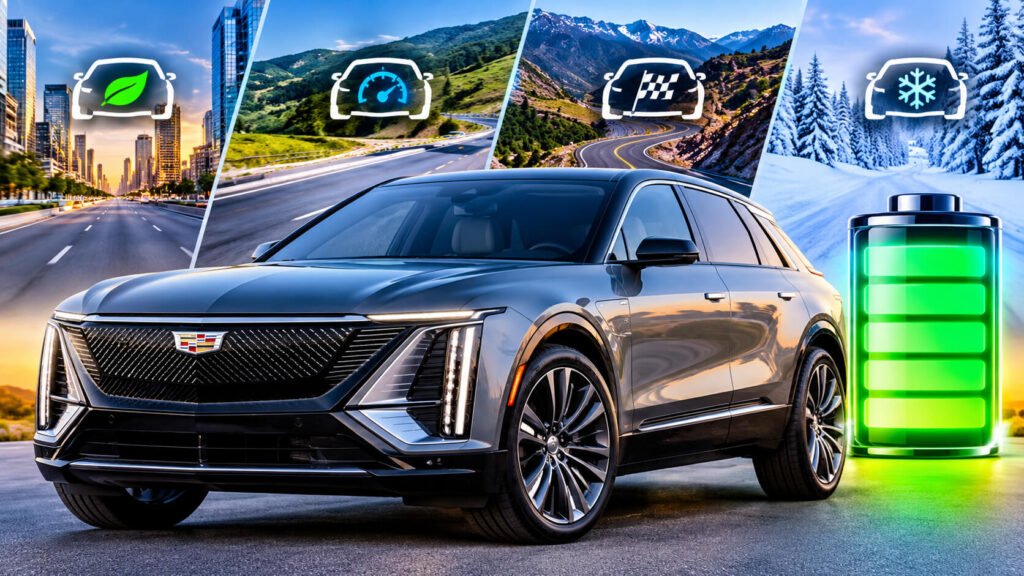
Each mode serves a different driving purpose, so a simple efficiency ranking can be misleading. Tour supports balanced everyday travel, Sport emphasizes responsiveness, Snow/Ice helps manage traction, and My Mode offers personalization. Their influence on Cadillac LYRIQ battery usage depends on settings, driving inputs, and road conditions.
The table provides a practical overview rather than measured consumption figures. Cadillac doesn’t publish one universal range penalty for each mode. Your own results may differ with temperature, speed, traffic, and vehicle configuration.
| Driving mode | Main purpose | Possible effect on energy use | Suitable situation |
|---|---|---|---|
| Tour | Balanced everyday driving | Supports smooth driving when used consistently | Commuting and regular trips |
| Sport | More responsive performance | Hard acceleration may increase consumption | Dry roads and spirited driving |
| Snow/Ice | Controlled traction | Helps manage wheel spin on slippery surfaces | Snowy or icy roads |
| My Mode | Personalized settings | Depends on selected settings and driving habits | Customized everyday driving |
Tour Mode vs. Sport Mode: Efficiency and Performance
Tour and Sport mainly differ in driving feel and response. Tour suits relaxed everyday travel, while Sport offers a sharper experience. If you maintain similar speeds and acceleration in both, the energy-use difference may be limited. Frequent hard acceleration can make Sport driving less efficient.
Snow/Ice Mode vs. Tour Mode: Traction and Energy Consumption
Tour is suitable for ordinary road conditions, while Snow/Ice helps manage slippery surfaces. Controlled acceleration can reduce unnecessary wheel spin when grip is limited. In these conditions, traction and safe handling matter more than small efficiency differences. Use the mode that matches the road.
My Mode vs. Other Driving Modes: Customization and Efficiency
My Mode differs because it lets you adjust selected driving characteristics. A relaxed acceleration preference may suit someone who wants a calmer response. However, personalization doesn’t guarantee lower consumption. The result depends on the settings available in your vehicle and the way you use them.
What to Expect From Real-World Energy Consumption
Two LYRIQ drivers can use different amounts of electricity on similar journeys. One may encounter headwinds, steep climbs, or heavy traffic, while the other enjoys mild weather and clear roads. Tracking kilowatt-hours (kWh) over a known distance gives you a more useful comparison than relying on estimated miles alone.
Which Cadillac LYRIQ Driving Mode Is Best for Maximum Range?
Tour Mode is a sensible everyday starting point because it offers balanced driving characteristics. However, the best choice depends on your route and conditions. Smooth acceleration, moderate speed, and sensible climate settings often matter more than changing modes repeatedly. Safe traction should always take priority when roads become slippery.
For highway journeys, focus on maintaining a suitable speed and planning charging stops. In winter, account for cold temperatures and heating demand. Use Sport when you want its performance characteristics, and choose My Mode if you prefer customized settings. No mode guarantees maximum range in every situation.
Best Mode for Daily Commuting and City Driving
Tour Mode works well for regular commuting and errands. City journeys often involve frequent stops, so gradual acceleration and early deceleration can help manage energy use. Where appropriate, regenerative braking can recover some energy as you slow down. Anticipating traffic also reduces unnecessary speed changes.
Best Mode for Highway Driving and Long Trips
Tour Mode is a practical choice for normal highway travel. Maintaining a steady, moderate speed can help limit aerodynamic resistance. Before leaving, check your route, charging options, weather, and expected arrival charge. High speeds and headwinds can reduce highway driving efficiency, regardless of the selected mode.
Best Mode for Performance and Responsive Acceleration
Sport Mode is suited to drivers who prefer a sharper response. It can make acceleration feel more immediate on suitable roads. The trade-off comes when you use that response frequently. Strong acceleration demands more power, which may reduce the distance available from a charge.
Best Mode for Snowy, Icy, and Wet Roads
Snow/Ice Mode is designed to help manage traction on slippery surfaces. Use it when conditions require controlled acceleration, and leave extra space for braking. Don’t choose a different mode just to pursue better range. Safe control matters more than a small potential efficiency difference.
Best Settings for Personalized Driving and Efficiency
My Mode may suit drivers who want a tailored everyday experience. Where available, a relaxed acceleration setting can make smooth inputs easier. However, the result still depends on speed, traffic, and climate-control demand. Choose settings for comfort and control rather than assuming customization saves electricity.
What Factors Affect Cadillac LYRIQ Battery Usage More Than Driving Mode?
Several conditions can have a substantial effect on electric-vehicle energy use. Highway speed, weather, road elevation, tire pressure, and passenger load all influence how much work the motor must do. These factors explain why the same vehicle can achieve different distances on different days.
Understanding them gives you practical ways to manage Cadillac LYRIQ battery consumption. Rather than focusing only on the mode selector, consider the complete journey. A cold, windy highway trip may require more energy than a shorter drive in mild weather.
1. Driving Speed and Highway Conditions
Air resistance increases as the vehicle travels faster. Consequently, sustained high speeds can require more electricity than moderate driving. Headwinds, heavy rain, and roof accessories may add resistance. Reducing unnecessary speed is one practical way to support better efficiency on longer journeys.
2. Acceleration, Braking, and Driving Habits
Hard acceleration demands more power from the electric motor. Repeatedly speeding up and braking also wastes energy that smoother driving could preserve. Look ahead, leave enough following distance, and accelerate gradually. These habits can improve driving efficiency without changing the selected mode.
3. Outdoor Temperature and Cold Weather
Cold weather can affect battery performance and increase cabin-heating demand. A cold battery may also limit regenerative braking until it reaches a more suitable temperature. The impact varies with the weather, trip length, and vehicle conditions. Winter range changes don’t automatically indicate permanent battery damage.
4. Heating, Air Conditioning, and Cabin Climate Control
Heating and air conditioning use electricity from the vehicle’s battery. Heating can be particularly demanding in cold conditions. Choose comfortable temperature settings instead of repeatedly using maximum output. If supported, preconditioning the cabin while connected to a charger may reduce the energy needed during the journey.
5. Road Conditions, Hills, and Elevation Changes
Climbing a hill requires energy because the vehicle gains elevation. Descending may allow regenerative braking to recover some of that energy, but it won’t recover everything used during the climb. Rough surfaces, standing water, snow, and loose gravel can also increase resistance and affect range.
6. Tire Pressure, Tire Condition, and Vehicle Load
Underinflated tires increase rolling resistance and can reduce efficiency. Tire condition and the type of replacement tires may also influence how easily the vehicle moves. Extra passengers and cargo add weight. Check tire pressure using the specifications on your vehicle’s tire-information label.
7. Regenerative Braking and One-Pedal Driving
Regenerative braking converts some motion energy into electricity as the vehicle slows. The LYRIQ also offers One-Pedal Driving and Regen on Demand where equipped. These features can recover some energy, but they cannot return all the electricity used during acceleration.
Regeneration may be limited when the battery is nearly full or very cold. Cadillac also advises against using One-Pedal Driving and Regen on Demand on slippery roads. Follow the owner’s manual and use the brake pedal when conditions require it.
How to Improve Cadillac LYRIQ Driving Range Without Changing Modes
You can support better range through everyday habits rather than constantly switching driving settings. Smooth acceleration, sensible highway speeds, proper tire pressure, and careful climate use all help manage energy demand. These steps are practical because they address factors that influence consumption on almost every journey.
You don’t need to sacrifice comfort or safe driving to improve efficiency. Start with small changes and observe the vehicle’s energy information over several trips. This gives you a clearer picture of which habits work best for your regular routes and weather conditions.
Maintain a Consistent and Moderate Speed
Steady driving generally requires less energy than repeated bursts of acceleration. Avoid unnecessary high speeds when traffic and road conditions allow. Cruise control may help on suitable roads, but remain attentive and adjust your speed when conditions change.
Avoid Unnecessary Hard Acceleration
Accelerate gradually instead of demanding maximum power at every traffic light. Leave enough space to respond to changing traffic without sudden braking. A smoother driving style reduces unnecessary energy demand while keeping the journey comfortable.
Use Regenerative Braking Effectively
Anticipate stops and allow the vehicle to slow smoothly. Use the available regenerative braking features according to Cadillac’s instructions. Remember that energy recovery is limited by battery conditions and road grip. Don’t use these features on slippery surfaces when the manufacturer advises against them.
Manage Cabin Heating and Air Conditioning
Choose comfortable climate settings without demanding maximum heating or cooling unnecessarily. Use available seat or steering-wheel heaters when appropriate. If your LYRIQ supports scheduled cabin preconditioning, preparing the interior while plugged in may reduce battery use during the journey.
Maintain Proper Tire Pressure
Check tire pressure regularly, particularly when temperatures change. Follow the pressure listed on the vehicle’s tire-information label rather than the maximum pressure printed on the tire. Inspect tread condition and arrange an inspection if you notice uneven wear or handling changes.
Precondition the Battery and Cabin When Appropriate
Battery preconditioning manages battery temperature for certain driving or charging conditions. Cabin preconditioning prepares the passenger space. These functions serve different purposes, and availability depends on vehicle equipment and software. Consult your model’s manual or charging interface for the correct instructions.
How to Compare Battery Consumption Between Cadillac LYRIQ Driving Modes
You can compare energy use on your own LYRIQ, but the test needs consistent conditions. Testing Tour on a mild morning and Sport during a cold evening won’t reveal the mode’s true influence. Keep the route, speed, climate settings, and passenger load as similar as possible.
Only test settings that suit the road conditions. Snow/Ice Mode should be used when the surface is slippery, not simply to complete a comparison. Record the vehicle’s available energy information and repeat suitable tests. This approach can reveal personal patterns without pretending to establish a universal result.
Step 1: Choose a Familiar Driving Route
Select a route you can repeat safely, preferably with similar road types and elevation changes. Record its distance and avoid unusual traffic or construction where possible. A consistent route makes differences easier to interpret.
Step 2: Keep Speed and Driving Habits Consistent
Maintain similar speeds and acceleration patterns during each test. Keep climate-control settings and passenger loads consistent as well. Record unavoidable differences, such as traffic or strong wind, because they may affect the result.
Step 3: Record Battery Usage and Energy Consumption
Note the starting and ending charge levels, trip distance, and available energy-use readings. If your vehicle displays kWh per distance, record that figure. Include outdoor temperature and average speed to provide useful context.
Step 4: Repeat the Test in Each Driving Mode
Repeat the route in Tour and Sport under comparable conditions. You can also test a specific My Mode setup. Use Snow/Ice only when slippery conditions genuinely require it. Never compromise safety to collect comparison data.
Step 5: Compare Results Under Similar Conditions
Compare energy use over the same distance instead of relying only on estimated remaining miles. Repeat tests before drawing conclusions. A single journey may reflect wind, traffic, or temperature rather than the selected mode.
| Information to record | Why it matters |
|---|---|
| Driving mode | Identifies the selected setting |
| Route distance | Makes trips comparable |
| Starting and ending charge | Shows the change in battery charge |
| Energy used | Helps compare electricity consumption |
| Temperature and weather | Explains environmental differences |
| Average speed | Helps account for driving conditions |
Cadillac LYRIQ Battery Health, Charging, and Long-Term Efficiency
A temporary range reduction doesn’t necessarily mean the battery has deteriorated. Cold weather, high speeds, and climate-control use can increase energy consumption without causing permanent capacity loss. Long-term battery condition is a separate issue influenced by age, temperature exposure, charging behavior, and battery management.
Follow Cadillac’s guidance for your particular model year rather than assuming every EV uses identical charging recommendations. The vehicle’s manual and charging settings provide the most relevant instructions. Good charging habits support proper operation, but no routine can guarantee a specific battery lifespan.
Do Driving Modes Affect Long-Term Battery Health?
Normal selection of Sport or another driving mode doesn’t automatically damage the battery. These settings primarily alter selected driving characteristics. Aggressive driving can raise short-term power demand, but that alone doesn’t establish a predictable battery-degradation rate.
Recommended Charging Habits for Everyday Use
Cadillac’s guidance for certain LYRIQ models recommends an 80% daily charge target while allowing higher charging when extra range is needed. Check the manual for your vehicle’s specific recommendations. Charging needs may differ between everyday travel and a longer journey.
Understanding Battery Preconditioning
Battery preconditioning prepares the battery for certain operating conditions, including some charging situations. It can be useful in cold weather when battery temperature affects charging or performance. Don’t confuse it with cabin preconditioning, which focuses on passenger comfort.
How Temperature and Charging Habits Influence Battery Performance
Very cold or hot conditions can affect battery performance, charging behavior, and regenerative braking. A temporary limitation caused by temperature isn’t the same as permanent capacity loss. Follow the vehicle’s charging guidance and pay attention to any dashboard warnings.
When to Check Battery Efficiency and Vehicle Maintenance
If energy use remains unusually high across similar trips, check tire pressure, tire condition, climate settings, and driving conditions first. Review any warning messages and charging behavior. If the issue continues, arrange an inspection with an authorized Cadillac service center.
Common Misconceptions About Cadillac LYRIQ Driving Modes
Driving modes change selected vehicle characteristics, but they don’t rewrite the battery’s physical limits. Confusion often arises when drivers mistake a changing range estimate for a change in battery capacity. Understanding what each feature actually does helps separate useful efficiency advice from exaggerated claims.
Regenerative braking and personalized settings also have limits. They can support efficient driving in suitable conditions, but neither guarantees extra miles. The key is to understand how each feature works and use it for its intended purpose.
Does Tour Mode Increase the Battery’s Actual Capacity?
No. Tour Mode doesn’t increase the battery’s physical capacity. It provides balanced driving characteristics for everyday use. Smooth driving may help you use the available energy efficiently, but the battery itself doesn’t store more electricity.
Does Sport Mode Always Reduce Range by a Fixed Amount?
No. There isn’t one fixed range penalty for every driver. Sport Mode changes selected driving responses, while actual consumption depends on acceleration, speed, traffic, and weather. Different drivers can therefore record different results.
Is Snow/Ice Mode the Most Efficient Choice in Winter?
No. Snow/Ice Mode focuses on traction and controlled acceleration. It isn’t designed specifically to maximize range. Cold temperatures, cabin heating, and slippery roads can still increase energy demand.
Does My Mode Automatically Improve Battery Efficiency?
No. My Mode offers personalization rather than automatic energy optimization. A relaxed acceleration setting may encourage smoother driving, but the outcome depends on your inputs and journey conditions.
Does Regenerative Braking Create Extra Energy?
No. Regenerative braking recovers some motion energy that would otherwise be lost during deceleration. Energy conversion isn’t perfectly efficient, so the system cannot return all the electricity used to accelerate.
Does One-Pedal Driving Guarantee More Driving Range?
No. One-Pedal Driving can recover some energy during deceleration, but the benefit depends on route and battery conditions. It isn’t a guaranteed range improvement and shouldn’t be used on slippery roads when Cadillac advises against it.
Frequently Asked Questions About Cadillac LYRIQ Driving Modes and Battery Usage
Do the driving modes in Cadillac LYRIQ offer different ranges or battery usages?
They can influence real-world energy use by changing selected driving characteristics. However, they don’t change battery capacity or create a fixed range difference. Driving habits and road conditions remain important.
Which Cadillac LYRIQ driving mode gives the best range?
Tour Mode is a sensible everyday starting point. Smooth acceleration, moderate speeds, and suitable climate settings are more important than relying on one mode to guarantee maximum range.
Does Sport Mode drain the Cadillac LYRIQ battery faster?
It can use more energy when you accelerate hard and frequently. Gentle inputs may reduce the difference. Cadillac doesn’t publish one universal percentage of range lost in Sport Mode.
Does Snow/Ice Mode improve battery efficiency?
Its main purpose is traction management on slippery surfaces. It isn’t an efficiency setting. Cold temperatures and cabin heating can still reduce winter range.
Can My Mode be configured for better driving range?
A relaxed acceleration setting may encourage smoother inputs where that option is available. However, My Mode doesn’t guarantee lower consumption or longer range.
Does One-Pedal Driving improve Cadillac LYRIQ range?
It can recover some energy during deceleration. The amount depends on driving conditions, battery temperature, and charge level. It doesn’t guarantee extra range.
Why does my Cadillac LYRIQ range estimate keep changing?
The estimate responds to recent driving habits and conditions. Speed, weather, terrain, and climate-control use can all affect its prediction. A changing estimate doesn’t automatically indicate battery damage.
Does using air conditioning reduce Cadillac LYRIQ range?
Yes. Heating and cooling use electricity from the battery. The effect depends on outdoor temperature, cabin settings, and how long the system operates.
Which driving mode is best for long road trips?
Tour Mode is a practical choice for normal highway travel. Maintain a suitable speed, check weather conditions, and plan charging stops before departure.
Do Cadillac LYRIQ driving modes affect battery health?
Normal mode selection doesn’t automatically harm battery health. Long-term condition depends on broader factors, including temperature exposure, charging behavior, and battery management.
Conclusion
The driving modes in Cadillac LYRIQ can influence real-world energy consumption, but they don’t change the battery’s physical capacity. Tour offers balanced everyday driving, Sport provides a sharper response, Snow/Ice helps manage traction, and My Mode allows selected settings to be personalized.
For everyday efficiency, focus on smooth acceleration, sensible highway speeds, correct tire pressure, and reasonable climate settings. Use the mode that suits the road rather than chasing a guaranteed mileage improvement. Your driving habits, weather, and route will shape how far your LYRIQ travels on each charge.
