




Safra Catz and John Stankey have built influential careers in two different areas of American business. Catz spent decades shaping Oracle’s financial and corporate strategy, while Stankey advanced through AT&T’s technology, operations, and executive leadership teams.
Their stories reveal how leaders manage growth, investment, and change. This guide examines their backgrounds, professional achievements, company strategies, reported compensation, and current positions. It also separates verified facts from estimates and avoids assuming a personal or professional connection without reliable evidence.
Profile Summary: Safra Catz and John Stankey
Safra Catz joined Oracle in 1999 and later became its president, Chief Financial Officer, and Chief Executive Officer. In September 2025, she became Executive Vice Chair. Her career reflects experience in finance, acquisitions, corporate operations, and enterprise technology.
John Stankey joined AT&T in 1985 and became its CEO in July 2020. He also became chairman in February 2025. His experience spans technology, business operations, media, and telecommunications strategy. Official biographies from Oracle and AT&T provide the primary references for their career histories.
| Profile detail | Safra Catz | John Stankey |
|---|---|---|
| Company | Oracle Corporation | AT&T |
| Current position in 2026 | Executive Vice Chair | Chairman and CEO |
| Joined company | 1999 | 1985 |
| Education | University of Pennsylvania and its law school | Loyola Marymount University and UCLA |
| Career background | Investment banking, finance, technology management | Telecommunications, technology, operations |
| Main business focus | Enterprise software and cloud services | Wireless, broadband, and connectivity |
Who Is Safra Catz?
Safra Catz is a business executive best known for her leadership at Oracle. She helped oversee major corporate decisions during a period when the company expanded beyond database software into enterprise applications and cloud services. Her experience combines financial management with broad operational responsibilities.
Her professional reputation is closely associated with deal execution and corporate strategy. She worked alongside Oracle founder Larry Ellison and other senior executives during major changes in the company’s business. Her current role differs from her former CEO position, so her responsibilities in 2026 should be described using Oracle’s latest official title.
Early Life, Education, and Background
Catz was born in Israel and later built her professional career in the United States. She attended the University of Pennsylvania and earned a law degree from its law school. Her education provided a foundation for analytical thinking, negotiation, and complex business decisions.
Safra Catz’s Early Career and Finance Background
Before joining Oracle, Catz worked at Donaldson, Lufkin & Jenrette, an investment bank where she became a managing director. This experience exposed her to financial analysis, corporate transactions, and the demands of major business clients. It also helped prepare her for executive responsibilities involving capital allocation and acquisitions.
How Safra Catz Built Her Career at Oracle
Catz joined Oracle in 1999, became a member of its Board of Directors in 2001, and was appointed president in 2004. She became Chief Financial Officer in 2005 and later served as CEO from 2014 until September 2025. These positions placed her at the center of Oracle’s financial and operational management.
Oracle Acquisitions and Business Strategy
Oracle expanded its business through major company acquisitions, including PeopleSoft and Sun Microsystems. The PeopleSoft transaction was announced in 2004 at an approximate value of $10.3 billion. Oracle announced its Sun Microsystems agreement in 2009 at an approximate value of $7.4 billion. Catz held senior leadership responsibilities during this period, although these transactions involved the wider executive team and board.
Safra Catz’s Leadership Style and Major Achievements
Catz’s career is associated with financial discipline, negotiation, and operational execution. Her responsibilities extended beyond accounting as she moved into senior management. Her record includes leading Oracle as CEO and helping manage its expansion, although the company’s achievements also depended on its engineers, product teams, sales staff, and other executives.
Safra Catz’s Current Role and Career in 2026
Oracle announced a leadership transition in September 2025, naming Clay Magouyrk and Mike Sicilia as co-CEOs. Catz became Executive Vice Chair after stepping down as CEO and principal financial officer. Oracle’s official leadership information should be checked for any subsequent changes before publication.
Who Is John Stankey?

John Stankey is an American telecommunications executive who leads AT&T as chairman and CEO. His career developed within the company, where he held roles involving technology, corporate strategy, operations, and media. This internal progression gave him experience across several parts of the business before he took its top leadership position.
The John Stankey biography illustrates a different route to executive management from Catz’s finance-led path. His main challenges involve infrastructure, customer service, competition, and investment in communications networks. His tenure has also included changes to AT&T’s media holdings and a renewed focus on connectivity.
Early Life, Education, and Professional Background
Stankey earned a business degree in finance from Loyola Marymount University and an MBA from UCLA. His education combined financial training with business management. These skills became relevant as he moved from technical and operating roles into positions responsible for larger business units.
John Stankey’s Early Career in Telecommunications
Stankey joined AT&T in 1985 and developed experience across its technology and operating functions. Telecommunications requires coordination between infrastructure, customer services, and commercial planning. His early roles helped him understand these connected responsibilities before his career expanded into senior corporate leadership.
His Rise Through AT&T Leadership
Stankey held senior positions including Chief Information Officer, Chief Technology Officer, and Chief Strategy Officer. He also led AT&T Operations and AT&T Business Solutions. These roles exposed him to internal systems, network operations, enterprise customers, and strategic planning across the company.
From Technology Executive to AT&T CEO
AT&T appointed Stankey CEO in July 2020, succeeding Randall Stephenson. He became chairman in February 2025. As CEO, he took responsibility for AT&T’s business performance, investment priorities, organizational direction, and relationships with shareholders.
John Stankey’s Leadership Style and Major Achievements
Stankey’s tenure has emphasized wireless and fiber network investment, operational priorities, and a more focused business portfolio. AT&T has reported substantial spending on its networks, including spectrum and capital investment. The results of this strategy should be judged through customer growth, service quality, financial performance, and execution rather than leadership claims alone.
John Stankey’s Current Role and Career in 2026
Stankey remains AT&T’s chairman and CEO in 2026, according to the company’s leadership information. His main responsibilities include guiding the connectivity business, overseeing network investment, and balancing customer needs with financial goals. AT&T’s annual reports provide details about its strategy and results.
What Connects Safra Catz and John Stankey?
Catz and Stankey are connected by their influence on large American technology-related businesses. Oracle develops enterprise software and cloud infrastructure, while AT&T provides wireless, broadband, and business connectivity. Their companies operate in different markets but support many of the same digital activities.
Their shared industry relevance does not establish that they are close colleagues or personally connected. A reliable comparison should focus on documented company roles, public announcements, and verifiable business events rather than assumptions based on their executive status.
Oracle and AT&T: Different Companies, Related Industries
Oracle Corporation supplies databases, business applications, and cloud services. AT&T provides telecommunications services, including wireless connections and fiber broadband. These products serve different immediate needs, yet both form part of the infrastructure that modern organizations use to operate.
Cloud applications depend on networks to reach users and transfer information. Telecommunications companies also rely on software and data systems to manage their services. This creates a natural connection between the industries, but it does not prove a specific partnership between the two executives.
The Business Relationship Between Oracle and AT&T
Oracle and AT&T operate in markets that can complement each other, particularly when enterprise software relies on network connectivity. However, a claim about a formal partnership, contract, or joint initiative needs evidence from a company announcement or credible reporting.
Their general business overlap is not enough to establish a direct executive relationship. If a specific Oracle–AT&T agreement is included in a future update, the article should identify its date, purpose, and primary source.
Have Safra Catz and John Stankey Worked Together Directly?
The official biographies cited in this article do not establish that Catz and Stankey led a named joint project or shared an executive position. That does not prove they have never met or communicated. It means a direct working relationship should not be presented as confirmed without supporting evidence.
Is There a Confirmed Personal Relationship Between Them?
No reliable source cited here establishes a family relationship or close personal connection between Catz and Stankey. Their documented professional histories concern different companies. Their shared relevance to business and technology leadership does not justify claims about their private lives.
Safra Catz vs. John Stankey: Career Comparison
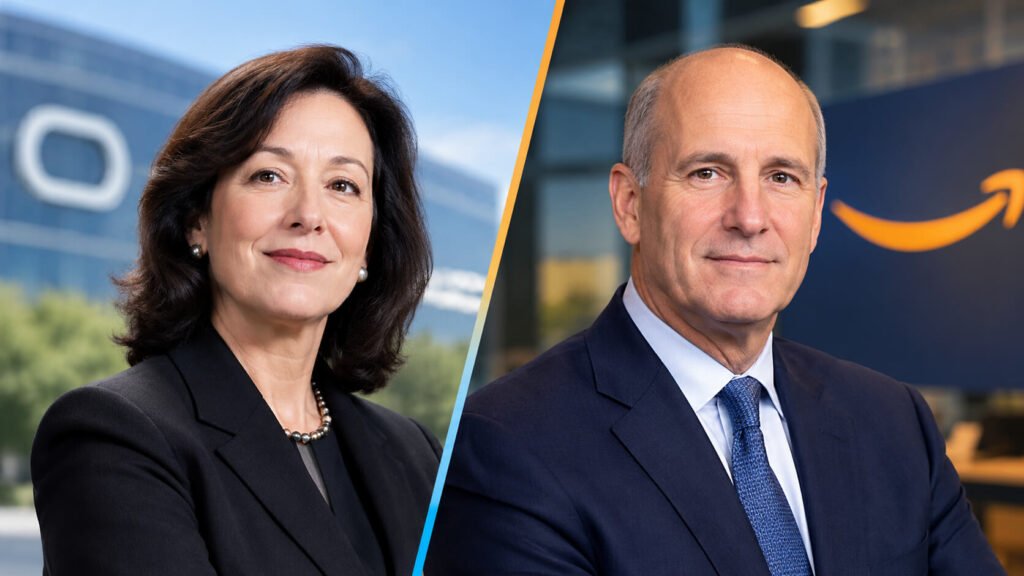
Catz developed her career through investment banking, finance, and Oracle’s senior management. Stankey advanced through AT&T’s technology, strategy, and operating divisions. Both eventually gained responsibility for large organizations, but their professional experience reflects the different demands of their industries.
Their positions in 2026 are not identical. Catz is Oracle’s Executive Vice Chair, while Stankey remains AT&T’s chairman and CEO. This distinction matters when comparing their present responsibilities, professional influence, and reported compensation.
Education and Career Background
Catz studied at the University of Pennsylvania and its law school before entering investment banking. Stankey earned a finance degree from Loyola Marymount University and an MBA from UCLA. Both received business-related education, but their early work experience developed different strengths.
Catz’s path emphasized finance and corporate transactions. Stankey’s career combined technology, business operations, and strategy within telecommunications. Their backgrounds help explain their later responsibilities without suggesting that one career path is inherently better than the other.
Leadership Positions and Responsibilities
Catz served as Oracle president, CFO, and CEO before moving into her current board role. Stankey became AT&T CEO in 2020 and chairman in 2025. Their titles reflect different responsibilities, particularly because Stankey remains the active CEO.
Catz’s experience gives her deep knowledge of Oracle’s history and strategic decisions. Stankey is responsible for AT&T’s ongoing operations and overall performance. A fair comparison should distinguish board leadership from direct executive management.
Leadership Styles and Business Strategies
Catz’s public career is associated with acquisitions, financial planning, and operational execution. Stankey’s tenure has focused on connectivity, network investment, and changes to AT&T’s business portfolio. Their strategic priorities reflect the different assets each company must manage.
Oracle invests in software platforms, databases, cloud services, and computing capacity. AT&T must also fund physical networks, spectrum, and infrastructure maintenance. Those differences shape the financial decisions, operating models, and measures of success available to each leader.
Major Achievements and Professional Recognition
Catz’s milestones include her appointments as Oracle president, CFO, and CEO, followed by her move to Executive Vice Chair. Stankey’s include his rise through AT&T, his leadership at WarnerMedia, and his appointments as CEO and chairman. These are verifiable career milestones rather than claims about personal superiority.
Company performance cannot be attributed to a single executive alone. Employees, customers, market conditions, technical teams, and other leaders all contribute. Evaluating achievements therefore requires documented results and clear context.
How Their Leadership Approaches Differ
Catz’s experience centers on enterprise technology, financial management, and corporate transactions. Stankey’s centers on telecommunications, network operations, and managing service businesses. Their approaches differ because their companies face distinct investment needs and competitive pressures.
Oracle must deliver useful software and expand cloud services while managing infrastructure costs. AT&T must maintain reliable connectivity and attract customers while funding large physical networks. These differences explain their strategic priorities more clearly than broad labels about personality or management style.
Safra Catz and John Stankey in 2026
Catz serves as Oracle’s Executive Vice Chair following the 2025 CEO transition. Stankey continues as AT&T’s chairman and CEO. Their current titles show why a 2026 comparison should not refer to both as serving CEOs.
Oracle’s leadership structure and AT&T’s operating strategy remain separate stories. For an accurate update, confirm their positions against the latest official leadership pages and company disclosures before publication.
Oracle Under Safra Catz: Strategy and Business Impact

Oracle has grown from a database-focused business into a broad enterprise technology provider. Its portfolio includes business applications, enterprise databases, cloud services, and infrastructure. Catz helped oversee the company during important stages of this expansion through her financial and executive responsibilities.
Oracle’s current direction also reflects the work of its present CEO team and technical organization. Its cloud business faces competition, rising demand for computing capacity, and new opportunities linked to artificial intelligence. These developments should not be attributed to Catz personally unless a source documents her specific role. Celeb Goes
Oracle’s Enterprise Software and Cloud Business
Oracle supplies software that helps businesses manage finance, human resources, supply chains, databases, and other core processes. Cloud applications let customers access services without operating every part of the underlying technology themselves. These tools are important to organizations that depend on reliable systems for everyday work.
Oracle Cloud Infrastructure, commonly called OCI, provides computing, storage, networking, and related services. It competes for customers that need scalable infrastructure for business applications and demanding workloads. Its growth depends on service quality, pricing, available capacity, and customer demand.
Acquisitions, Financial Strategy, and Corporate Growth
Oracle used acquisitions to broaden its technology portfolio and customer base. PeopleSoft strengthened its enterprise applications business, while Sun Microsystems added hardware and software assets. Hyperion also expanded Oracle’s business performance management offerings.
Acquisitions can accelerate expansion, but they create integration challenges. A company must bring together products, employees, customers, and systems while managing costs. Catz’s finance and executive experience was relevant to Oracle’s transaction strategy, although acquisition outcomes depended on the work of many teams.
Artificial Intelligence and Cloud Infrastructure
Artificial intelligence has increased demand for computing power, storage, networking, and data services. Cloud providers are investing in infrastructure that can support AI workloads alongside traditional business applications. Oracle competes in this market through OCI and its wider enterprise technology portfolio.
Growth creates risks as well as opportunities. Providers must invest ahead of demand while controlling costs, maintaining reliability, and competing with other cloud platforms. Oracle’s performance will depend on execution and customer demand, not simply on the popularity of AI.
Safra Catz’s Influence on Oracle’s Business Direction
Catz influenced Oracle through her work in finance, acquisitions, operations, and executive management. Her progression from president and CFO to CEO gave her broad responsibility during years of company change. She also worked alongside Larry Ellison and other senior leaders.
Oracle’s products and infrastructure, however, depend on engineering, research, sales, and operations teams. In 2026, Catz is Executive Vice Chair rather than CEO. Current company decisions should be attributed to Oracle’s present leadership unless her direct involvement is documented.
AT&T Under John Stankey: Strategy and Business Impact
AT&T has increasingly emphasized connectivity through wireless services and fiber broadband. Its strategy has also involved reducing its exposure to media assets and concentrating on telecommunications. These choices reflect the costs of operating networks and the company’s view of its long-term priorities.
Stankey oversees this strategy as chairman and CEO. AT&T’s performance depends on more than investment spending; it also depends on network quality, customer retention, competition, and financial discipline. The company’s annual reports provide the clearest evidence of its targets and reported results.
AT&T’s Telecommunications and Connectivity Business
AT&T provides mobile service, fiber broadband, and connectivity for businesses. These services support communication, internet access, and the digital operations of households and organizations. Reliable networks have become essential for work, education, entertainment, and access to online services.
Telecommunications requires continued spending on equipment, spectrum, maintenance, and capacity. AT&T must upgrade its network while keeping service dependable and prices competitive. Its focus on wireless and fiber reflects the continuing demand for both mobile access and high-capacity home and business connections.
The Shift Away From DirecTV and Media Operations
AT&T agreed in September 2024 to sell its remaining 70% stake in DirecTV to TPG. The transaction closed on July 2, 2025, leaving DirecTV wholly owned by TPG’s investment platform. AT&T described the sale as part of its focus on wireless and fiber connectivity. Details are available in the company’s announcement.
The transaction followed AT&T’s earlier expansion into entertainment, including its ownership of WarnerMedia. The company later moved toward a more focused telecommunications model. This DirecTV divestiture illustrates how a company may sell assets to concentrate resources on businesses it considers more central to future growth.
Customer Experience and Network Investment
AT&T competes on network coverage, reliability, pricing, support, and service quality. Customers also increasingly consider whether wireless and home broadband services work well together. A strong customer strategy therefore requires both technical investment and dependable service.
AT&T has set targets for expanding fiber availability. Its annual reports explain the company’s network plans and performance measures. Targets should be described as goals until the company reports that it has achieved them.
AI, 5G, and Technology Transformation
AT&T’s technology priorities include 5G wireless, fiber-optic networks, automation, and data-driven operations. These tools can support network capacity and more efficient service delivery. They also require careful management of security, reliability, and operating costs.
AI may help with network planning, customer service, and internal processes. However, adoption alone does not guarantee better business results. AT&T must show that new systems improve efficiency or customer outcomes while supporting its broader network strategy.
John Stankey’s Impact on AT&T’s Business Strategy
Stankey’s tenure has included the sale of AT&T’s remaining DirecTV stake and a stronger focus on connectivity. The company continues to invest in wireless and fiber services while competing in a crowded market. These moves define important parts of its recent strategic direction.
The long-term impact will depend on whether AT&T turns network investment into profitable growth. Competition, pricing, costs, and customer satisfaction will shape the results. Stankey sets the overall direction, but execution depends on employees, network teams, business partners, and market conditions.
Safra Catz vs. John Stankey: Age, Nationality, and Personal Background

Catz and Stankey have public biographies focused mainly on their education and professional careers. Catz was born in Israel and built her executive career in the United States. Stankey’s career has developed within the American telecommunications industry.
Biographical details should be included only when reliable sources support them. Corporate profiles and regulatory filings are generally stronger sources for career and education information than unsourced celebrity-style websites. This is especially important for personal details that have little connection to their professional work.
Safra Catz’s Age, Nationality, and Background
Oracle’s proxy statement has listed Catz’s age in its official disclosures, while its executive biography provides her education and career history. Before publishing an exact age in 2026, verify her date of birth against a reliable source rather than calculating from an outdated filing.
Her background includes education in the United States and early work in investment banking. Those experiences helped shape her route into corporate management. They offer useful professional context without requiring speculation about her private life.
John Stankey’s Age, Nationality, and Background
Public biographies commonly report that Stankey was born in 1962. That would make him approximately 63 or 64 during 2026, depending on his birthday. An exact age should be published only after confirming the underlying birth information through a credible source.
His professional background is closely connected to AT&T. He advanced through technology, strategy, and operating roles before becoming CEO. His career is a useful example of internal executive succession at a large telecommunications company.
Family and Personal Life: What Is Publicly Known?
Catz and Stankey are best documented through their professional activities. Their official biographies focus on executive positions, education, and business experience. Personal details should be included only when they are reliably reported and relevant to the article.
Leaving unsupported information out is better than repeating rumors. Their careers already provide substantial material for a comparison of corporate strategy, business transformation, and executive responsibilities.
Height and Physical Appearance: Verified Information Only
The reliable corporate sources cited here do not establish verified height measurements for Catz or Stankey. Physical appearance also provides little insight into their professional performance, so exact measurements should be omitted unless trustworthy documentation becomes available.
Safra Catz vs. John Stankey: Net Worth and Earnings
Net worth and executive compensation measure different things. Net worth estimates attempt to calculate a person’s assets minus liabilities, while compensation disclosures report pay under company and regulatory rules. Neither measure automatically reveals how much cash a person received after taxes or how much wealth they currently hold.
Public company filings offer the strongest evidence about reported executive pay. Online net worth estimates often use unclear methods and may not account for private assets, liabilities, or changes in stock prices. Any wealth comparison should explain these limits rather than present uncertain figures as confirmed facts.
Safra Catz’s Estimated Net Worth and Income Sources
Catz’s financial position is linked to her long Oracle career, executive compensation, and equity awards. Yet annual compensation is not the same as total personal wealth. A reliable net worth calculation would require a full picture of assets and liabilities that may not be publicly available.
Oracle’s proxy statement provides reported compensation information and details about its leadership transition. It can help readers understand her executive pay, but it does not establish a definitive current net worth.
John Stankey’s Estimated Net Worth and Income Sources
Stankey’s publicly documented income includes compensation from AT&T. His reported pay may include salary, incentive compensation, stock awards, and other items. These amounts are disclosed under formal reporting rules and should not be confused with total personal wealth.
AT&T’s proxy statement reports his compensation for the relevant year. Readers should consult that filing for the breakdown because award values and compensation categories can change between reporting periods.
Executive Compensation, Salary, and Stock Awards
The following figures are reported compensation, not estimates of net worth. They come from different companies and reporting periods, so they should not be treated as a direct comparison of cash income.
| Executive | Reporting period | Reported total compensation |
|---|---|---|
| Safra Catz | Oracle fiscal 2025 | Approximately $461.8 million |
| John Stankey | AT&T calendar 2025 | Approximately $29.9 million |
Oracle’s proxy reported a much higher total for Catz in fiscal 2025, including substantial equity-related amounts. AT&T’s proxy reported approximately $29.9 million for Stankey in 2025. Because compensation structures and reporting periods differ, the figures require context before comparison.
Who Is Richer: Safra Catz or John Stankey?
The available compensation disclosures do not establish either executive’s complete net worth. Catz’s reported compensation for Oracle fiscal 2025 was higher than Stankey’s reported compensation for 2025, but that difference does not prove the exact gap between their personal wealth.
A reliable answer would require current, transparent estimates of both individuals’ assets and liabilities. Without that evidence, a definitive ranking would be misleading. Readers should treat third-party net worth figures as estimates unless the source explains its method and supporting information.
Safra Catz vs. John Stankey: Similarities and Differences
Both executives have managed large organizations through business change and technological shifts. Their work involves investment decisions, competition, operational performance, and shareholder expectations. Each career demonstrates how senior leadership depends on setting priorities and coordinating many teams.
Their main differences come from their industries. Oracle competes through software and cloud services, while AT&T provides telecommunications and broadband. Those business models require different infrastructure, investment cycles, and measures of customer value.
Similarities in Corporate Leadership
Catz and Stankey have experience with long-term planning, financial oversight, and organizational change. Both have worked in companies where technology and customer expectations continue to evolve. Their decisions can affect employees, customers, business partners, and investors.
Neither executive can deliver results alone. Product development, engineering, customer support, finance, and operations all contribute. Leadership provides direction, while teams turn plans into services and measurable business outcomes.
Differences in Industries and Business Responsibilities
Catz’s career is closely tied to enterprise technology and Oracle’s financial and operating strategy. Stankey’s responsibilities involve communications networks, customer services, and infrastructure. Oracle sells systems that help businesses manage information, while AT&T connects people, devices, and organizations.
These models create different risks. Software companies must maintain product quality, security, and competitiveness. Telecom providers must also fund physical infrastructure, maintain coverage, and acquire spectrum. The differences shape each executive’s investment priorities and operating responsibilities.
Enterprise Technology vs. Telecommunications
Enterprise technology includes databases, cloud applications, and software used to manage business operations. Oracle provides tools that help organizations store information, coordinate processes, and run critical systems. Its services are part of the technology stack used by companies across many industries.
Telecommunications provides the connections that allow people and systems to communicate. AT&T’s wireless and fiber networks support mobile service, broadband access, and business connectivity. The two sectors increasingly depend on each other because cloud applications require reliable networks to reach users.
How Oracle and AT&T Contribute to the Technology Economy
Oracle supports companies through software, databases, cloud services, and computing infrastructure. These products help organizations manage information and run digital operations. Their value depends on reliability, security, and the ability to meet business needs.
AT&T supports the economy through broadband, wireless service, and business networks. These connections help people work, communicate, and access digital services. Together, enterprise software and telecommunications form complementary parts of the infrastructure behind modern American business.
Awards, Achievements, and Professional Legacy
Catz and Stankey reached senior leadership through different professional routes. Catz advanced through finance and Oracle management, while Stankey gained experience across AT&T’s technology and operating divisions. Their career histories offer concrete milestones for evaluating their professional contributions.
Awards can provide additional context, but they do not measure a leader’s entire impact. Business outcomes, customer value, investment choices, and organizational performance also matter. Claims about achievements should be supported by records rather than promotional language.
Safra Catz’s Career Milestones and Recognition
Catz joined Oracle in 1999 and later served as president, CFO, and CEO. Her move to Executive Vice Chair in 2025 marked another stage in her career. Oracle’s official biography provides the most reliable starting point for her appointments and professional background.
John Stankey’s Career Milestones and Recognition
Stankey joined AT&T in 1985 and held leadership roles across technology, strategy, operations, and media. He became CEO in 2020 and chairman in 2025. His career record includes overseeing major portfolio changes and the company’s focus on connectivity.
Their Influence on Corporate Leadership and Technology
Catz’s career illustrates how finance and transaction experience can lead to broad responsibility in enterprise technology. Stankey’s path shows how technical and operational experience can prepare an executive to lead a telecommunications business. Both careers highlight the value of industry knowledge and organizational experience.
Their lasting influence will depend on business outcomes as well as titles. For Oracle, that includes product competitiveness and cloud execution. For AT&T, it includes network quality, customer satisfaction, and the returns generated by infrastructure investment.
Why Safra Catz and John Stankey Matter in 2026
Oracle and AT&T remain important because they support different needs in the digital economy. Oracle provides software and cloud infrastructure, while AT&T supplies wireless and broadband connectivity. Both face pressure to invest in new technology while meeting customers’ current expectations.
Their current roles also offer a useful lesson in succession and executive responsibility. Catz now serves in a senior board role, while Stankey remains an active CEO. Their careers show that leadership must be understood through actual responsibilities rather than titles alone.
The Importance of Enterprise Software and Cloud Computing
Cloud computing allows businesses to use computing resources and applications through managed services. It can reduce the need to operate all hardware internally, although customers must still consider cost, security, compliance, and reliability. Oracle competes with databases, business applications, and cloud infrastructure.
Demand for AI-related computing adds pressure to cloud providers. They must expand capacity while maintaining service quality and controlling costs. Oracle’s future growth depends on its ability to meet enterprise needs and compete effectively in a crowded market.
The Role of Telecommunications and Reliable Connectivity
Reliable connectivity supports business communication, online services, and access to cloud applications. Fiber broadband provides high-capacity fixed connections, while 5G wireless supports mobile access and connected devices. AT&T’s investment strategy emphasizes these technologies.
Network expansion requires time and capital. AT&T must balance new coverage with maintenance, customer service, and financial returns. Growth in network availability is useful, but it must translate into better service and sustainable customer demand.
AI, Digital Transformation, and Future Business Opportunities
AI can help companies analyze information, automate tasks, and improve some operational processes. Successful adoption requires useful data, security, responsible governance, and a clear business purpose. Technology alone cannot guarantee improved productivity or financial performance.
Oracle may benefit from demand for cloud infrastructure and AI workloads. AT&T may use AI to support network operations and customer service. Both opportunities depend on execution, cost management, and the value customers receive.
Their Current Positions and Future Challenges
Catz’s current role is Executive Vice Chair at Oracle, following the 2025 CEO transition. Clay Magouyrk and Mike Sicilia became co-CEOs under that change. Stankey continues as AT&T’s chairman and CEO, with responsibility for the company’s overall business direction.
Oracle must compete in cloud services and meet demand for computing capacity. AT&T must expand connectivity while managing infrastructure costs and customer expectations. Both face changing markets, but their future challenges differ because their products, assets, and operating models are not the same.
Safra Catz and John Stankey: Quick Comparison Table
| Category | Safra Catz | John Stankey |
|---|---|---|
| Company | Oracle Corporation | AT&T |
| Current position | Executive Vice Chair | Chairman and CEO |
| Company start date | 1999 | 1985 |
| Major former roles | President, CFO, CEO | CIO, CTO, CSO, WarnerMedia CEO |
| Education | University of Pennsylvania and its law school | Loyola Marymount University and UCLA |
| Industry | Enterprise software and cloud computing | Telecommunications and connectivity |
| Strategic themes | Acquisitions, finance, operations, cloud services | Fiber, 5G, network investment, business focus |
| 2025 reported compensation | About $461.8 million for Oracle fiscal 2025 | About $29.9 million for calendar 2025 |
| Definitive net worth | Not established by compensation filings alone | Not established by compensation filings alone |
The comparison uses company disclosures for career roles and reported compensation. The compensation periods differ, and neither figure should be treated as a net worth estimate. Confirm current roles and figures against the latest proxy statements before republishing.
Frequently Asked Questions About Safra Catz and John Stankey
The following answers focus on common questions about their careers, current positions, and professional connection. Each answer uses cautious wording where public information does not establish a definitive conclusion.
Who Are Safra Catz and John Stankey?
Safra Catz is Oracle’s Executive Vice Chair and former CEO. John Stankey is AT&T’s chairman and CEO. Catz’s background includes finance and enterprise technology, while Stankey’s experience covers telecommunications, operations, strategy, and media leadership.
What Is Safra Catz’s Role at Oracle in 2026?
Catz serves as Executive Vice Chair of Oracle’s Board of Directors. She took the role in September 2025 after leaving the CEO and principal financial officer positions. Oracle’s official leadership page is the best source for confirming any later changes.
Is Safra Catz Still the CEO of Oracle?
No. Catz stepped down as CEO in September 2025. Oracle appointed Clay Magouyrk and Mike Sicilia as co-CEOs and named Catz Executive Vice Chair.
What Is John Stankey’s Role at AT&T in 2026?
Stankey remains AT&T’s chairman and CEO. He became CEO in July 2020 and chairman in February 2025. His role includes responsibility for the company’s overall strategy, operations, and business performance.
How Did Safra Catz Influence Oracle?
Catz contributed through senior roles in finance, acquisitions, operations, and executive management. She helped oversee Oracle during important stages of its growth. Its achievements also reflect the work of engineers, product teams, sales staff, and other executives.
What Changes Did John Stankey Lead at AT&T?
Stankey has overseen AT&T’s shift toward a more focused connectivity business. The company sold its remaining DirecTV stake in 2025 and has continued investing in fiber and wireless networks. The long-term impact depends on execution and financial results.
Are Safra Catz and John Stankey Related?
No credible source cited here establishes a family relationship between them. Their public biographies describe separate careers at Oracle and AT&T.
Have Safra Catz and John Stankey Worked Together?
The sources cited here do not establish a specific joint project or direct executive partnership. Any claim that they worked together should be supported by a documented agreement, public announcement, or reliable reporting.
Who Is Older: Safra Catz or John Stankey?
Public records and biographies should be checked for exact birth dates before making a definitive comparison. Oracle has disclosed Catz’s age in a proxy statement, while public biographies commonly list Stankey’s birth year as 1962. An exact conclusion should not rely on estimates alone.
Who Is Richer: Safra Catz or John Stankey?
Their reported compensation figures differ significantly, but those figures do not establish total personal wealth. A reliable net worth comparison requires transparent estimates of assets and liabilities, not annual compensation alone.
What Is the Main Difference Between Oracle and AT&T?
Oracle focuses on enterprise software, databases, cloud applications, and computing infrastructure. AT&T focuses on telecommunications, wireless service, fiber broadband, and connectivity. Their businesses serve different needs but both support the digital economy.
Conclusion: Two Different Paths to Corporate Leadership
Catz and Stankey illustrate two distinct routes to senior business leadership. Catz advanced through investment banking, finance, and Oracle’s executive ranks. Stankey developed his career across AT&T’s technology and operating divisions before becoming CEO and chairman.
In 2026, Catz serves as Oracle’s Executive Vice Chair, while Stankey leads AT&T as chairman and CEO. Their companies face different strategic demands, from cloud infrastructure and AI workloads to fiber broadband and wireless investment. A useful comparison focuses on verified roles, documented decisions, and measurable outcomes rather than repeated claims or uncertain wealth estimates.
Sources and Further Reading
Oracle’s official executive biography and SEC filings provide information about Catz’s career, leadership transition, and reported compensation. AT&T’s leadership page, annual reports, and proxy statements document Stankey’s positions and the company’s strategy. For acquisition and transaction history, use the companies’ original announcements wherever possible.
- Oracle: Safra Catz executive biography
- Oracle investor relations: annual reports and proxy materials
- AT&T: John Stankey executive biography
- AT&T investor relations: annual reports and proxy materials
- Oracle’s PeopleSoft acquisition announcement
- Oracle’s Sun Microsystems acquisition announcement
- AT&T’s DirecTV transaction announcement
These sources should be checked again before publication to ensure that executive titles, financial figures, and company plans remain current.
