



The phrase TheJavaSea.me AIO-TLP371 has raised questions about an alleged online leak. Readers want to understand what the label means, whether a real data breach occurred, and whether related downloads could put their devices or personal information at risk.
The key is to separate documented facts from online speculation. A filename does not prove that stolen information exists, and repeated articles do not establish that an incident is genuine. This guide examines the label, explains the potential security risks, and shows you how to protect your accounts without downloading suspicious files.
What Is TheJavaSea.me Leaks AIO-TLP371?
TheJavaSea.me leak is a phrase used in online searches and discussions about an alleged file collection labeled AIO-TLP371. People may encounter it while looking for technical information, investigating a possible exposure, or searching for downloadable files. However, the phrase alone does not establish the archive’s origin, authenticity, or contents.
The distinction between an alleged data leak and a confirmed security incident is important. Reliable evidence must support claims about stolen records, affected organizations, or exposed individuals. Without that evidence, readers should avoid treating the archive as a verified breach or assuming that their information appears in it.
What Does AIO-TLP371 Mean?
The AIO-TLP371 meaning remains uncertain without reliable documentation explaining the complete label. Its letters resemble common technical abbreviations, but that does not prove the name follows an official cybersecurity standard. It may be a custom identifier or a label used by people discussing the alleged collection.
Understanding the term requires separating familiar meanings from assumptions about this particular case. The following sections explain what the components may suggest and what cannot be established from the name alone.
What Does AIO Stand For?
In technology, AIO commonly means “all-in-one.” It often describes a product or package that combines several features in one place. However, this general usage does not prove that the AIO-TLP371 archive contains multiple databases, software tools, or personal records.
Does TLP371 Refer to the Traffic Light Protocol?
The letters TLP may refer to the Traffic Light Protocol, a framework used by cybersecurity teams to communicate how sensitive information can be shared. The organization FIRST maintains the standard and defines its recognized labels. TLP371 is not an official FIRST designation. Its appearance in an archive name does not establish a connection to the protocol.
What Does the Number 371 Represent?
There is no verified explanation for the number 371 in this label. It could be part of a custom identifier or simply a naming choice, but these possibilities remain speculative. It should not be interpreted as a victim count, file total, or security rating without supporting evidence.
Is AIO-TLP371 an Official Cybersecurity Classification?
AIO-TLP371 is not a recognized classification within FIRST’s published Traffic Light Protocol. The official framework uses TLP, TLP, TLP, and TLP. These labels guide information sharing; they do not certify leaked archives or confirm security incidents. Readers can consult the official TLP documentation for the definitions.
Is TheJavaSea.me Leaks AIO-TLP371 a Confirmed Data Breach?
A data breach involves unauthorized access to, disclosure of, or other compromise of information. Confirming one usually requires credible evidence, such as a statement from an affected organization or a documented security investigation. An unfamiliar archive name and several articles repeating the same allegation are not enough.
The evidence available for this article does not establish that AIO-TLP371 is a confirmed breach with identified victims or verified records. That does not prove that no incident occurred. It means the claim should remain unconfirmed until trustworthy evidence establishes what happened.
What Is Publicly Verified About AIO-TLP371?
The official meaning of the Traffic Light Protocol can be checked through FIRST’s documentation. General risks associated with unknown downloads can also be explained using established cybersecurity guidance. However, those facts do not verify the alleged archive’s contents or origin.
A reliable report about AIO-TLP371 would need to identify its evidence, explain how the information was obtained, and distinguish direct findings from assumptions. Without that documentation, claims about particular victims, passwords, or organizations should not be presented as established facts.
Which Claims Remain Unverified?
Claims about stolen credentials, private photographs, company records, victim numbers, or the archive’s completeness need independent support. The same applies to statements suggesting that a named organization has confirmed the incident. Strong wording does not make an unsupported technical claim reliable.
Does AIO-TLP371 Actually Contain Personal Information?
The label does not establish whether the AIO-TLP371 archive contains names, email addresses, passwords, or other personal details. Its contents and authenticity would need to be independently verified. Downloading it to investigate is unnecessary and could expose you to malicious files or other security problems.
Why Multiple Websites May Report the Same Unverified Claim
Several websites can repeat one allegation without conducting separate investigations. If every article relies on the same anonymous post, the reports do not provide independent confirmation. To evaluate a claim, follow its citations back to the original source and look for separate, credible evidence.
Why Is TheJavaSea.me Leaks AIO-TLP371 Trending?
An unfamiliar technical label connected to an alleged leak may attract attention because people want to know whether it affects them. Others may encounter the phrase through search results, forums, or social posts. These are possible reasons for interest, not proof of a measured trend or a confirmed incident.
A claim that the topic is trending should be supported by dated search data or reliable reporting. Without that evidence, it is more accurate to explain why the subject attracts questions than to invent search statistics or claim that a specific event caused increased interest.
Search Interest and Online Discussions
People often search for unfamiliar terms after seeing them in a headline or online discussion. Queries about the AIO-TLP371 meaning may reflect curiosity rather than evidence that a person intends to access the files. Search interest cannot establish whether an alleged breach is authentic.
Curiosity About Alleged Leaked Files
The promise of exclusive or hidden information can encourage people to click unknown links. This creates opportunities for deceptive download pages and phishing attacks. If your concern is account exposure, use legitimate breach-checking services instead of risking your device to inspect an archive.
How Repeated Articles and Search Suggestions Spread Claims
Search suggestions reflect search behavior, while publishers may repeat phrases that attract readers. Neither mechanism verifies a security claim. A responsible article should trace allegations to their sources and clearly distinguish confirmed findings from speculation.
Is TheJavaSea.me Safe or Legit?
A reliable TheJavaSea.me website review would require current evidence about the specific domain, its operators, its pages, and its downloads. The name alone cannot establish whether the site is legitimate. Without a trustworthy technical assessment, it would be misleading to label the entire website safe or malicious.
Avoid entering sensitive information or downloading files from a page you cannot independently verify. Warning signs include deceptive redirects, unexpected installation requests, and login forms that do not belong to a trusted service. These precautions apply to unknown websites generally and do not prove that every page associated with this name behaves the same way.
Warning Signs of an Untrustworthy Website
Unexpected redirects, aggressive pop-ups, forced extensions, and requests to disable security software deserve caution. Fake download buttons may send visitors to unrelated pages or ask them to provide sensitive information. Leave a page if it behaves deceptively rather than following instructions designed to pressure you.
Does HTTPS Guarantee Website Safety?
HTTPS encrypts the connection between your browser and a website, helping protect information while it travels across the network. It does not prove that the operator is trustworthy or that downloaded files are safe. A fraudulent website can also use HTTPS.
How to Evaluate Online Reviews and Security Claims
A useful review identifies its author, publication date, evidence, and testing methods. Look for specific findings instead of vague claims about whether a site is safe. Compare independent sources and check whether they rely on original evidence or simply repeat another article.
Why Unofficial Mirror Websites Can Be Dangerous
An unofficial mirror may imitate a known site while providing modified files or deceptive login pages. A similar domain name and familiar design do not prove that it belongs to the original operator. For software and documents, use the verified publisher or a trusted repository instead.
What Are the Risks of TheJavaSea.me Leak Downloads?
The main AIO-TLP371 risks come from interacting with unknown websites and files. A suspicious download could be harmless, misleading, or dangerous; the label does not reveal which. Potential problems include malware, stolen credentials, unwanted tracking, and exposure to private or copyrighted material.
Privacy and legal concerns also matter when an archive allegedly contains someone else’s information. Downloading or sharing such material can cause additional harm, while legal consequences depend on the content and circumstances. Avoid unverified files and use legitimate channels to investigate possible exposure.
Malware and Malicious Downloads
Malware is software designed to perform harmful or unwanted actions. Depending on its purpose, it may steal information, spy on activity, damage files, or allow unauthorized access. A file’s name or icon cannot establish that it is safe.
Do not open an unknown archive simply to inspect its contents. Keep your operating system and security software updated, and download applications from trusted publishers. If you already opened a suspicious file, stop interacting with it and run a scan using reputable security software.
Phishing Pages and Fake Download Buttons
A phishing page imitates a trusted service to collect passwords, payment details, or other sensitive information. A page advertising leaked files may display misleading buttons that redirect visitors to fake sign-in forms. Never enter account credentials to access an unknown archive.
Password Theft and Account Compromise
Stolen passwords can expose email, financial, social, and workplace accounts. The danger increases when the same password is reused across services. Use unique passwords stored in a reputable password manager, and enable multifactor authentication wherever possible.
Identity Theft and Personal Information Exposure
Personal information exposure may involve contact details, account credentials, addresses, or identity data. Criminals can misuse such information for impersonation, fraud, or targeted scams. There is no verified basis here to claim that AIO-TLP371 contains these records.
If you suspect identity theft in the United States, visit IdentityTheft.gov for official guidance. Review financial accounts and contact the relevant providers through their verified channels.
Privacy, Copyright, and Legal Concerns
An alleged archive can raise issues involving digital privacy, consent, copyright infringement, and unauthorized distribution. Material does not become free to share merely because it appears online. Laws vary depending on the content and circumstances, so people facing a specific legal concern should seek qualified advice.
Browser Tracking and Unwanted Permissions
Unknown websites may ask visitors to enable notifications or install extensions that collect browsing information. Review your browser’s permissions, remove extensions you do not recognize, and restore settings that changed unexpectedly. These steps help reduce unnecessary tracking and other website security risks.
How to Check Whether Your Information Has Been Exposed
Start with trustworthy services and official account notifications rather than downloading the alleged archive. A breach-checking service may identify known incidents involving an email address, while a provider’s notice may explain what information was affected. No single service can guarantee that all personal information is safe.
Next, review important accounts for unfamiliar logins, changed recovery details, and suspicious transactions. If a credible notice identifies an affected service, follow its instructions through the official website. Avoid unsolicited messages that pressure you to click unfamiliar links or disclose more information.
Use Reputable Data Breach Notification Services
Have I Been Pwned allows users to check whether an email address appears in breaches included in its database. It can help identify known exposure, but a negative result does not prove that an account has never been affected. Use established services rather than unknown websites asking for passwords or sensitive files.
Check Official Security Advisories
An official security advisory provides information from a relevant organization or recognized security source. In the United States, CISA publishes cybersecurity guidance and alerts. Check the notice’s date, affected services, and recommended actions to ensure it relates to the incident you are investigating.
Review Important Online Accounts for Suspicious Activity
Check your primary email, financial accounts, social platforms, and work services for unfamiliar devices, sessions, recovery details, or transactions. Sign out unknown sessions and contact the provider if you cannot explain a change. If a work account may be affected, report the concern to your organization’s security team. Celeb Goes
Avoid Downloading Unknown Archives to Verify a Leak
Downloading the archive is not a safe or reliable way to determine whether your information appears in it. The files may be mislabeled, malicious, incomplete, or unrelated to the claim. Use trusted notification services, official account alerts, and qualified security professionals when an investigation requires technical analysis.
What to Do If You Downloaded a Suspicious AIO-TLP371 File

Your response depends on whether you merely downloaded a file, opened it, installed software, or entered account details. Do not assume infection without evidence, but avoid further interaction until you have assessed the situation. Keep relevant warning messages and file details without redistributing potentially private material.
If you suspect that the file executed malicious code, seek reputable technical guidance and consider disconnecting the affected device from the network. Secure potentially exposed accounts from a trusted device. If this is a work device, notify the organization’s IT or security team.
Stop Opening or Sharing the File
Do not open, extract, or forward the file to others. Sharing a suspicious archive may spread malware or expose private information. If an investigation is underway, follow the instructions of the relevant security professional before deleting potential evidence.
Scan Your Device With Reputable Security Software
Update your operating system and security software, then run a full scan. Follow the tool’s instructions if it detects a threat. If unusual behavior continues, seek qualified technical help instead of installing unknown “cleaner” applications advertised by pop-ups.
Change Potentially Exposed Passwords
If you entered credentials on a suspicious page or suspect they were stolen, change the affected passwords from a trusted device. Change reused passwords as well, starting with your primary email account. Review recovery details and sign out unfamiliar sessions.
Enable Multifactor Authentication
Multifactor authentication adds a verification step beyond your password. An authenticator app or security key can help prevent unauthorized access when a password is stolen. Keep recovery codes secure, and never share one-time codes with someone who contacts you unexpectedly.
Check Your Browser, Accounts, and Device for Suspicious Activity
Review browser extensions, notification permissions, account sessions, and recent security alerts. Remove unfamiliar extensions and contact affected services through official support channels. Record suspicious activity and its date so a security professional can investigate without requiring you to reopen the file.
What to Do If Your Personal or Intimate Information Was Leaked
If private information appears online without your consent, avoid downloading or reposting it. Record relevant URLs, dates, account names, and threatening messages without spreading the material. Then report the content to the hosting platform and use the removal options available for the type of information involved.
Non-consensual intimate images require particular care because redistribution can increase harm. In the United States, relevant laws and platform policies may provide reporting and removal options. If the situation involves threats, blackmail, or a minor, use the appropriate specialist services or contact law enforcement when necessary.
Preserve Evidence Without Redistributing the Content
Record page addresses, account names, dates, and related messages. Avoid creating or circulating additional copies of intimate images, especially when a minor may be involved. Follow official reporting guidance and preserve only appropriate evidence.
Report the Content to the Hosting Platform
Use the platform’s official privacy, harassment, or intimate-image reporting process. Provide the relevant URL and explain the concern without sharing unnecessary personal information. The Federal Trade Commission also provides information about image-based abuse and possible next steps.
Request Removal From Google Search Results
Google content removal may help remove eligible personal information or intimate imagery from search results. Start with Google’s official removal guidance and follow the process for the relevant content type.
Removing a result from Google Search does not necessarily delete the original page. Contact the hosting platform separately and submit the correct URLs through its official reporting channel.
Use Appropriate Image-Removal and Hashing Services
StopNCII.org helps eligible adults address the non-consensual sharing of intimate images through participating platforms. NCMEC Take It Down provides a separate service for eligible intimate images taken when someone was under 18. Read the official instructions carefully and do not download or share images to use these services.
Report Threats, Blackmail, or Extortion
If someone threatens to publish intimate material unless you pay or provide more content, preserve the messages and report the account. Avoid sending additional material or confronting the person if doing so could increase the danger. For suspected online exploitation involving a minor in the United States, use the NCMEC CyberTipline. Contact emergency services if you face immediate danger.
Is TheJavaSea.me Down? How to Check Website Availability Safely
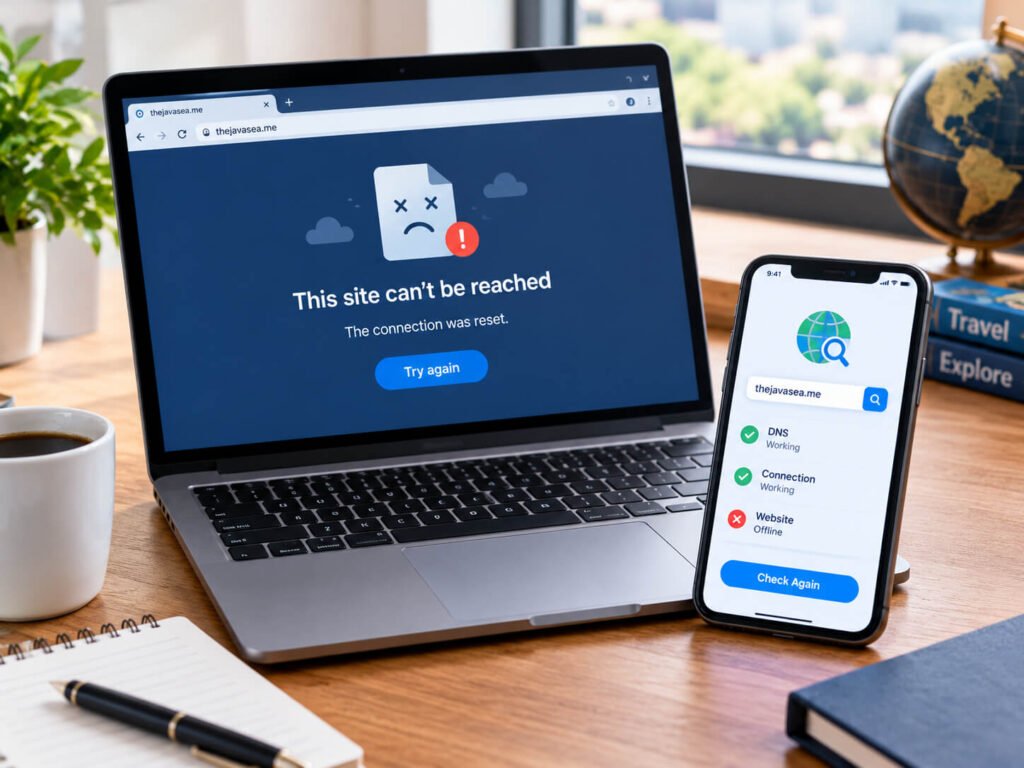
A website can become unavailable because of maintenance, hosting problems, domain issues, or network errors. A failed connection does not prove that authorities shut the site down or that an alleged leak was confirmed. These are separate claims that require separate evidence.
If you need to check availability, use reputable status information where available. Avoid repeatedly clicking unfamiliar links or installing tools to access a page. If your main concern is data exposure, focus on official notifications and account security instead of treating website uptime as evidence of a breach.
Common Reasons a Website May Be Unavailable
A site may be offline because its server failed, its domain expired, its hosting provider interrupted service, or its operator took it down. Browser and network problems can also affect access. These are general possibilities, not verified explanations for TheJavaSea.me’s status.
How to Check Website Status Without Opening Suspicious Links
Use a reputable status-checking service or a trusted technical source. Avoid services that ask you to install software or provide account credentials just to check availability. Remember that a site being online does not make it trustworthy, and an offline site does not prove a security incident occurred.
Why Unofficial Mirrors and Alternative Domains Carry Risks
An unofficial mirror may imitate a known site while providing altered files or deceptive login pages. Similar branding does not prove a connection to the original operator. Avoid alternative-domain links from unknown sources and obtain files through verified publishers whenever possible.
What Are the Safer Alternatives to TheJavaSea.me?
The best alternative depends on your goal. People looking for software should use official publishers or authorized marketplaces. Those researching cybersecurity should consult recognized organizations and official advisories. Readers concerned about possible exposure should use trusted breach-notification services instead of downloading unknown archives.
These options provide clearer information about the source and intended use of the material. They also reduce the risk of malicious downloads, unauthorized distribution, and unnecessary exposure of personal data.
Official Software Websites and Authorized Marketplaces
Download applications from verified developer websites or authorized marketplaces. Check the publisher’s identity, release information, and installation instructions before running a file. Avoid installers delivered through unsolicited messages or unknown download pages.
Trusted Open-Source Repositories
Established open-source repositories may provide project documentation, release histories, and information about maintainers. Check the repository owner and installation instructions before using a package. Open-source availability does not guarantee safety, so avoid unexplained commands or requests to disable security tools.
Free and Open Educational Resources
Universities, public libraries, and legitimate educational platforms offer free learning materials and technical references. Check the publisher and licensing information before downloading content. If a resource is copyrighted, look for an authorized edition or a copy shared by the rights holder.
Official Cybersecurity Advisories and Breach Notifications
Use CISA, FIRST, and official notices from relevant service providers for security information. These sources serve different purposes, so match the information to your question. Do not treat a general advisory as confirmation of the specific AIO-TLP371 allegation.
Contacting the Original Publisher or Data Owner
If you need a legitimate file, contact the verified publisher or data owner through an official website. Ask where the file is available and whether it is authorized for distribution. If you suspect your information was exposed, contact the relevant service provider through its verified security or support channel.
How to Verify Claims About TheJavaSea.me Leaks AIO-TLP371
Cybersecurity incident verification requires more than finding several pages with the same headline. Start with the original claim, identify its source, and check whether the evidence supports the conclusion. An official statement or independent technical report is more useful than an anonymous post with no supporting details.
If no credible source establishes the archive’s origin or contents, describe those details as unknown. A careful assessment can explain established technical facts without inventing a connection between the label and a confirmed incident.
Separate Verified Facts From Speculation
Verified facts are supported by evidence that can be checked. Speculation includes explanations that may sound possible but lack adequate support. For example, the existence of a file named AIO-TLP371 does not prove that it contains stolen credentials or private records.
Check Original Sources, Dates, and Supporting Evidence
Follow citations to the original source and check publication dates, author details, and supporting documentation. Make sure a report refers to the same archive and incident rather than an unrelated event. Several articles that cite the same post should not be treated as independent confirmation.
Recognize Unsupported Technical Claims
Claims about exact victim counts, stolen passwords, confirmed malware, or affected organizations need evidence. Technical terminology alone does not make an article reliable. If the author does not explain how the findings were obtained, treat the claims cautiously.
Understand Why Repeated Reporting Does Not Prove a Leak Is Genuine
Repeated articles may share one source rather than represent separate investigations. Count the independent evidence, not the number of search results. If no original or independently corroborated evidence exists, the allegation remains unconfirmed.
What Should Businesses Do About Unverified Leak Claims?
Businesses should investigate credible warnings without assuming that every online allegation is true. An unfamiliar archive label may justify checking relevant security reports, but it does not establish that company data was exposed. Organizations should follow established incident-response procedures and protect confidential information throughout the process.
If evidence identifies a potential incident, involve qualified security staff and consult legal or privacy professionals where necessary. Preserve relevant records, limit access to sensitive material, and communicate findings based on verified facts rather than speculation.
Investigate Potential Data Exposure Responsibly
Security teams should review relevant alerts, access records, and official communications to determine whether the claim connects to their organization. Any technical examination of suspicious files should be handled by qualified staff using appropriate safeguards. Document what the investigation establishes and what remains uncertain.
Protect Customer and Employee Information
Maintain access controls, unique credentials, multifactor authentication, updated systems, and monitoring for suspicious activity. If evidence suggests that information was exposed, take proportionate steps such as revoking sessions or resetting affected credentials. Inform the appropriate internal security team and avoid circulating unnecessary copies of sensitive data.
Notify Affected People When Necessary
Notification duties depend on the facts, the type of information involved, and applicable laws. A rumor alone does not establish a legal duty, but a confirmed incident may trigger specific requirements. Businesses should seek qualified legal advice and provide affected people with accurate, practical information.
Communicate Verified Security Findings Transparently
Public statements should distinguish confirmed findings from ongoing investigation. Explain the known impact, the actions being taken, and any steps recipients should follow. Use official company channels and correct earlier statements when reliable new information changes the findings.
Frequently Asked Questions
What Is TheJavaSea.me Leaks AIO-TLP371?
The phrase refers to online discussion connecting TheJavaSea.me with an alleged archive labeled AIO-TLP371. The label does not establish the archive’s authenticity, contents, or connection to a confirmed data breach.
Is AIO-TLP371 a Confirmed Data Breach?
The evidence discussed here does not establish a confirmed breach involving AIO-TLP371. Reliable incident reporting or independently verifiable evidence would be needed to support that conclusion.
What Does AIO-TLP371 Mean?
AIO often means “all-in-one,” but the full label’s meaning remains unverified. There is no reliable basis for assigning a specific meaning to the number 371.
Is TLP371 an Official Traffic Light Protocol Classification?
No. FIRST’s official Traffic Light Protocol uses TLP, TLP, TLP, and TLP. TLP371 is not one of its official designations.
Is TheJavaSea.me Safe to Visit?
Its current safety cannot be established from the name alone. Avoid unknown downloads, suspicious redirects, and requests for sensitive information. HTTPS does not guarantee that a website or file is trustworthy.
Can AIO-TLP371 Downloads Contain Malware?
Unknown downloads can pose malware risks, but the label does not prove that a specific file is malicious. Avoid opening the archive and use reputable security software if you already downloaded a suspicious file.
Should I Download the Archive to Check My Information?
No. Use reputable breach-notification services, official security notices, and account activity checks. Downloading an unverified archive can create unnecessary security and privacy risks.
What Should I Do If I Think My Data Was Leaked?
Check official notices, secure potentially affected accounts, change compromised passwords, and enable multifactor authentication. For suspected identity theft in the United States, visit IdentityTheft.gov for guidance.
How Can I Remove Leaked Personal Images From Google?
Use Google’s personal content removal process and report the material to the hosting platform. Search-result removal does not necessarily delete the original content.
What Are the Safest Alternatives to TheJavaSea.me?
Use official publishers, authorized marketplaces, trusted open-source repositories, and legitimate educational resources. For security information, consult CISA, FIRST, and official notices from the relevant provider.
Final Verdict: What Is Actually Known About AIO-TLP371?
The label AIO-TLP371 does not, by itself, prove that a genuine data breach occurred. Its complete meaning, the archive’s origin, and its alleged contents remain unverified in the evidence discussed here. FIRST does not recognize TLP371 as an official Traffic Light Protocol designation.
Readers should avoid suspicious downloads and verify claims through credible sources. If you suspect account exposure, review your security settings and follow official guidance. If private images appear online without consent, report them through the hosting platform and appropriate removal services. Careful verification, responsible reporting, and practical online privacy protection are more useful than risking your device to investigate an unconfirmed claim.
